Tinnitus (Ringing in the Ears): Causes and What Actually Helps
 By Emily Carter
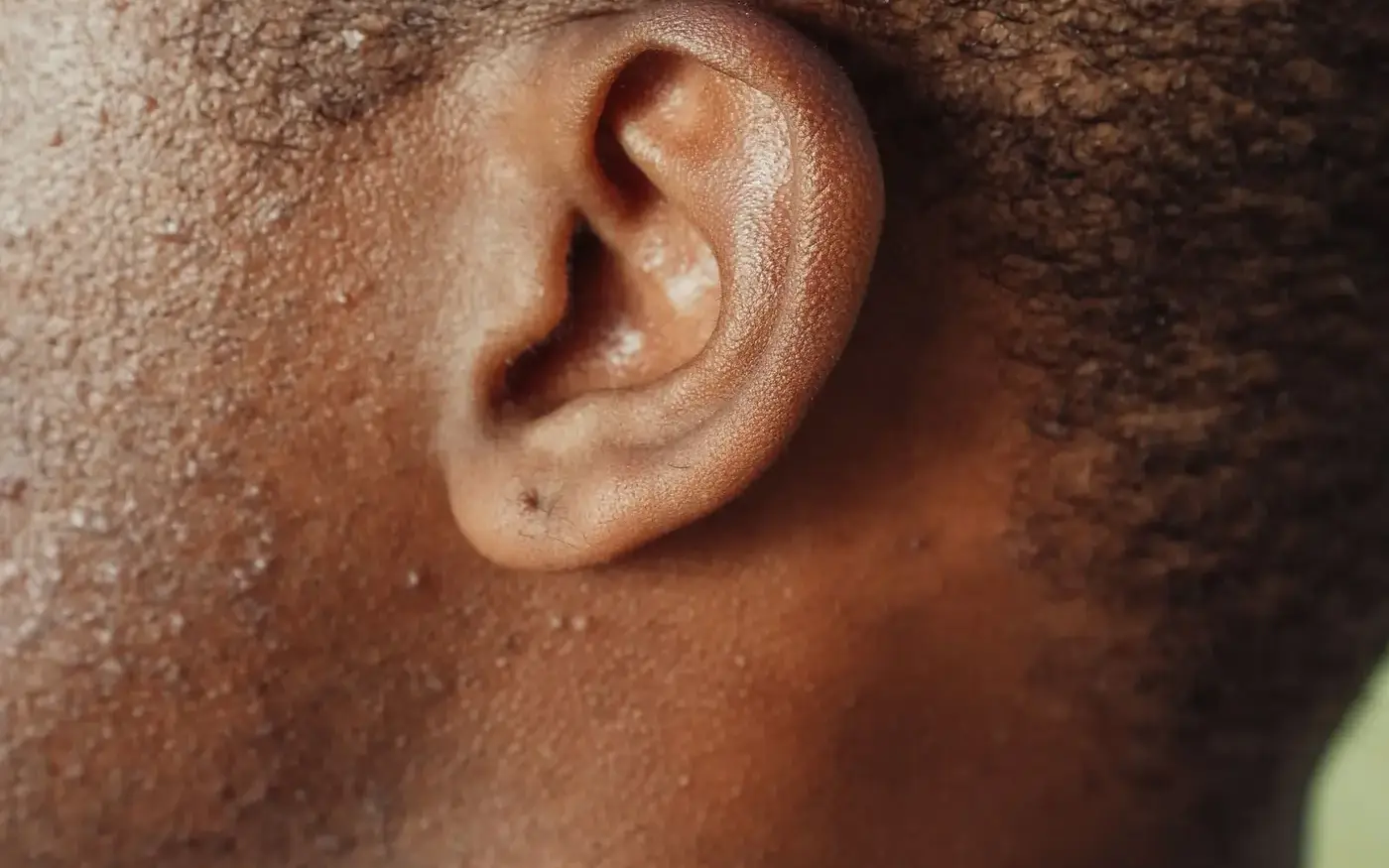
Roughly one in four U.S. adults has experienced tinnitus in the past year. Photo: Kindelmedia / Pexels.
Tinnitus is the perception of sound — usually ringing, buzzing, or hissing — with no external source. It affects roughly 25 million American adults and is most often caused by inner-ear damage from noise or aging. There is no single cure, but sound therapy, hearing aids, cognitive strategies, and correcting nutritional deficiencies can significantly reduce it.
That soft, high-pitched ring you hear when the room is silent — the one that gets louder at night and seems to have taken up permanent residency in your left ear — has a name. It is called tinnitus, and if you have it, you have a lot of company.
According to research published in The Lancet Regional Health – Americas, about 25.3% of U.S. adults have experienced tinnitus in the past year, and roughly 8% live with it every day. It is one of the most common signals the inner ear sends when something has changed. The good news: even though the sound itself often cannot be silenced completely, most people can meaningfully lower how loud, distressing, or noticeable it feels.
What is tinnitus, exactly?
Tinnitus is the perception of sound with no real outside source, such as ringing, buzzing, hissing, or a heartbeat-like pulse. It can be constant or come and go, in one ear or both. It is not a disease itself but a symptom, so finding the underlying cause matters most.
Tinnitus is the perception of sound without a real, outside source. That sound might be a high whistle, a low hum, ocean-like rushing, cricket chirps, or a heartbeat-like pulse. It can come and go, or be constant. It can affect one ear or both.
Contrary to how it feels, ringing in the ears is not a disease of its own — it is a symptom. It is the ear or the brain telling you something else is going on. Sometimes that "something else" is minor (a bit of earwax) and sometimes more serious (a medication reaction, cardiovascular issue, or nerve problem). That is why the underlying cause matters more than the sound itself.
Subjective vs. objective ear ringing
Clinicians divide the condition into two categories, and knowing which one you have changes what happens next.
- Subjective — by far the more common form. Only you can hear the sound. It is generated somewhere along the auditory system (inner ear, auditory nerve, or brain) and cannot be picked up by an external instrument. The vast majority of chronic cases fall here.
- Objective — rare. The sound has a physical source inside the body that a clinician can actually hear with a stethoscope or specialized equipment. Typical causes include blood flow turbulence in nearby vessels (pulsatile ear ringing), muscle spasms in the middle ear, or eustachian tube dysfunction. Because objective cases have a mechanical origin, they are often more treatable — and sometimes fully resolvable.
If your ear ringing is rhythmic (matching your heartbeat) or if someone else has heard it too, mention that specifically to your doctor. It changes the workup.
What causes ringing in the ears?
The most common causes are noise exposure, age-related inner-ear changes, earwax blockage, certain medications, cardiovascular problems such as high blood pressure, and jaw joint issues. Often several factors overlap. Because some causes are easy to fix, such as earwax, a doctor's check is the best place to start.
The most common culprits are:
- Noise exposure. Concerts, power tools, gunfire, motorcycles, and years of loud headphones. According to CDC/NIOSH data, about 8% of all U.S. workers already have tinnitus, and roughly 28% have been exposed to hazardous workplace noise. Our guide to noise-induced hearing loss covers how loud sound damages the ear and how to prevent it.
- Age-related inner-ear changes. As sensory hair cells in the cochlea decline (a process called presbycusis), tinnitus often appears alongside hearing loss.
- Earwax blockage. Simple, common, and surprisingly loud when it happens. A quick clinical clean-out often solves the problem. Our guide to daily habits that damage hearing explains why cotton swabs usually make it worse.
- Medications. High-dose aspirin, some antibiotics (especially certain aminoglycosides), some diuretics, and some chemotherapy drugs are known to be "ototoxic."
- Cardiovascular issues. High blood pressure, atherosclerosis, or turbulent blood flow near the ear can cause pulsatile tinnitus (a rhythmic whoosh that matches your heartbeat).
- Jaw and neck problems. TMJ (temporomandibular joint) dysfunction and cervical spine issues can radiate to the ear.
- Stress, poor sleep, caffeine, and alcohol. These do not usually cause tinnitus, but they reliably make it louder.
- Nutrient deficiencies. A well-known study indexed on PubMed found that 47% of tinnitus patients with noise-induced hearing loss had vitamin B12 deficiency, compared with 19% of people with normal hearing.
How long does tinnitus usually last?
It depends on the trigger. Ringing after a loud concert usually fades within hours or a couple of days. Tinnitus lasting three months or longer is considered chronic. Even then it often fluctuates with stress, sleep, salt, and caffeine, and many people find it fades into the background over time.
It depends on the trigger. Tinnitus after a loud concert or fireworks show is usually temporary — the ringing fades within hours or a couple of days as the inner ear recovers. Tinnitus that sticks around for three months or longer is considered chronic and is what most people mean when they say they "have tinnitus."
Even chronic tinnitus is rarely static. It fluctuates with stress, sleep, salt, caffeine, medication changes, and the underlying condition. Many people report that once they understand and manage those triggers, the sound recedes from front-of-mind to just background.
What actually helps reduce tinnitus?
No single treatment works for everyone, but a combination often helps: fixing treatable causes like earwax and blood pressure, sound therapy, hearing aids, cognitive behavioral therapy, correcting nutritional deficiencies, and healthy lifestyle habits. No supplement, device, or app will make tinnitus vanish overnight, so expect gradual improvement.
No single treatment works for everyone, and no supplement, device, or app will make it vanish overnight. But research and clinical experience point to a stack of things that genuinely help, often in combination.
1. Fix what can be fixed
Start with the physical checklist: earwax removal, blood pressure control, review of every medication with your doctor, treatment of TMJ or dental issues, and a hearing test to rule out treatable middle-ear problems.
This is the step people skip most often, usually because the ringing feels like an ear problem rather than a whole-body one, but it is where the fastest wins tend to happen. A five-minute look with an otoscope can catch an earwax blockage that has been amplifying the sound for months. A blood pressure check can catch a cardiovascular issue that is driving a pulsing, heartbeat-like version of the ringing. None of this requires a specialist referral to start — a primary care visit is a reasonable first stop, and your doctor can refer you onward if something needs an audiologist's closer look. Our guide to natural home remedies for ear health separates the safe options from the ones to skip.
2. Sound therapy
Because the ringing stands out most in silence, adding low-level background sound — a fan, a white-noise app, gentle music, or a purpose-built masker — often reduces how prominent it feels. Many hearing aids now include built-in masking programs for exactly this reason.
3. Hearing aids (yes, even for mild hearing loss)
When ear ringing comes with hearing loss, restoring the missing frequencies with a hearing aid often turns the volume down on the ringing as well. It is one of the most consistently effective interventions in the audiology literature.
4. Cognitive Behavioral Therapy (CBT)
The American Tinnitus Association and multiple clinical guidelines list CBT as the most evidence-supported psychological treatment. It does not silence the sound — it changes the brain's alarm response to it, which for many people is the difference between suffering and coexisting.
A typical course runs eight to twelve weekly sessions, either one-on-one or in a small group, often paired with relaxation training and structured sound exposure. The goal is not to convince you the sound isn't there — it clearly is — but to retrain the brain's threat response so the ringing stops competing for your attention the way a ticking clock fades into the background once you stop listening for it. Several audiology practices now offer CBT-informed tinnitus programs directly, so it is worth asking your audiologist whether one is available locally before assuming you would need a separate referral to a therapist.
5. Correct nutritional deficiencies
If bloodwork shows a deficiency in B12, folate, vitamin D, or magnesium, correcting it often helps — sometimes dramatically. In people without a deficiency, results are much less consistent. Our guide to the best vitamins and nutrients for ear health covers what the research actually says about each one.
6. Lifestyle housekeeping
Sleep, stress management, less caffeine, less alcohol, no smoking, regular movement. Boring, unglamorous, and genuinely effective. Most people find that the loudest ear ringing days are also their most stressful, sleep-deprived days. For women in midlife, our guide to tinnitus and menopause looks at how hormone changes fit in.
A few specific habits punch above their weight:
- Protect sleep first. Even one poor night reliably makes the sound feel louder the next day. Our guide to tinnitus that gets worse at night explains why the sound rises at bedtime. A cool, dark room, a consistent bedtime, and a bit of low-level background sound (a fan, a white-noise app) at night help most people.
- Watch salt and caffeine. Both can raise inner-ear pressure and worsen the ringing for some people. Track your own pattern for two weeks before deciding whether to cut back.
- Move your body most days. Regular walking, swimming, or cycling improves the small-vessel blood flow that feeds the cochlea. Aim for 30 minutes, five days a week — nothing heroic.
- Manage the stress you can. A brief daily practice — a walk without a podcast, five minutes of slow breathing, a short journaling habit — will do more for the sound than most supplements.
- Mind the volume. Once you have the condition, further loud exposure tends to make it worse. Foam earplugs at concerts, gigs, and lawn work are the cheapest insurance you will ever buy.
None of these will make the sound vanish. Stacked together over a few months, they almost always turn it from front-of-mind to background.


What about natural supplements for tinnitus?
The evidence is mixed. Studies of ginkgo biloba, zinc, and proprietary blends have been inconsistent, and one 2016 study found about 70% of participants noticed no meaningful difference. A transparent supplement built on well-studied nutrients can be a reasonable addition to the basics, but never a replacement for a medical evaluation.
This is where honesty matters more than hype. The supplement aisle promises a lot. The research is more cautious. Ginkgo biloba, zinc, and various proprietary blends have all been studied, and the results are mixed — one 2016 study found that about 70% of participants noticed no meaningful difference from supplementation.
That said, when a supplement is built around nutrients with a real evidence base — B-complex vitamins, magnesium, plant extracts linked to inner-ear circulation — and it is transparent about ingredients and refund policy, it can be a reasonable addition to the basics. It should never replace a proper evaluation of the underlying condition.
Audifort: a liquid drop formula that features ear-supportive nutrients
Audifort is a liquid supplement built around ingredients associated in the research with inner-ear health, including B-complex nutrients and plant extracts linked to circulation. It will not silence the ringing for everyone, and it is not a substitute for seeing an audiologist. But it has a clean ingredient list and a 90-day money-back guarantee, which makes it a low-risk option to test if the basics are already in place.
Read our full Audifort review → Our review page contains affiliate links. If you buy through them, Better Hearing Daily may earn a small commission at no extra cost to you. This does not change our editorial view.When should you see a doctor about tinnitus?
See a doctor promptly if tinnitus appears suddenly, affects only one ear, pulses with your heartbeat, comes with hearing loss, dizziness, facial weakness, or ear pain, or follows a head injury or a new medication. These signs can point to conditions that are easier to manage when caught early.
Most tinnitus is annoying but not dangerous. A smaller subset points to something that needs medical attention. See a doctor promptly if:
- The tinnitus appeared suddenly or is only in one ear.
- It is pulsing in time with your heartbeat (pulsatile tinnitus).
- It is accompanied by hearing loss, dizziness, facial weakness, or ear pain.
- It followed a head or ear injury.
- It began after starting a new medication.
These signs can point to conditions like sudden sensorineural hearing loss, blood vessel abnormalities, or acoustic neuroma — all more manageable when caught early.