Natural Home Remedies for Ear Health: What Works and What Doesn't
 By Emily Carter
A shelf of “natural” ear remedies can feel reassuring — but some help, some don’t, and a couple can seriously hurt you. The evidence is what decides.
Some natural home remedies for ear health are safe and useful — a few drops of warm olive or mineral oil to soften earwax, a warm compress on the outside of the ear for pain, keeping ears dry after swimming. Others, like ear candling and cotton-swab digging, are useless at best and unsafe at worst. Whether something is “natural” says nothing about whether it works — the evidence does.
Almost everyone has a home remedy story about ears. A grandmother who dropped warm garlic oil in a fussy toddler’s ear. A friend who swears by ear candling. A partner who reaches for the cotton swabs after every shower. Some of those habits are harmless. Some are surprisingly useful. And a couple can cause real, sometimes permanent, damage.
Natural home remedies for ear health live in a strange gap between medicine and folklore. Some have real support and a place in mainstream guidance from the NHS and Mayo Clinic. Others survive because they feel like they’re doing something, not because they are. This guide sorts the most common ones into three honest buckets: what actually works, what’s harmless but unproven, and what you should stop doing tomorrow — with every claim tied to a real source (the FDA, the NIH, the NHS, Mayo Clinic, and the American Academy of Otolaryngology).
How do you tell a safe home remedy for your ears from a risky one?
Ask three questions: does it go inside the ear canal, is your eardrum definitely intact, and does a reputable medical source such as the NHS, Mayo Clinic, or an ENT guideline recommend it? Remedies used outside the ear carry less risk, and no liquid should go in if the eardrum might be damaged.
Before we go through specific remedies, three simple filters do most of the work. Run any ear remedy — from your grandmother, from an influencer, from the shelf of a health-food store — through these questions:
- Is it going into the ear canal, or staying on the outside? Anything you put inside the ear (drops, candles, cotton swabs, hair pins, garlic cloves) carries more risk than something applied externally (a warm compress, a heating pad). The bar for evidence and safety needs to be much higher for anything you insert.
- Do you know your eardrum is intact? If there is any chance of a perforated eardrum — recent ear pain, drainage, ear tubes, a history of ear surgery, or a sudden pop — do not put drops of anything (oil, hydrogen peroxide, garlic, tea tree) into the ear. MedlinePlus is explicit: never irrigate or use softening drops if the eardrum may have a hole in it or you have had recent ear surgery.
- Does a reputable medical source list it? Not a blog, not a supplement seller — a clinical guideline, a national health institute, a hospital patient-education page. If the only sources are Etsy candle sellers and TikTok, that’s data too.
One more filter applies to you, not the remedy. The American Academy of Otolaryngology–Head and Neck Surgery earwax guideline lists diabetes, a weakened immune system, blood-thinning medication, and a damaged eardrum as factors that change how earwax should be managed. If any of those apply to you, let a clinician handle ear cleaning instead of trying it at home.
Those questions filter out most of the dangerous folklore before you even open the bottle. The sections below go through the specific remedies people ask about most often.
Which home remedies for ear health actually work?
Only a few, and they treat mild, specific problems. Oil or over-the-counter drops can soften earwax, a warm cloth on the outside of the ear can ease earache, drying the ears helps prevent swimmer's ear, and swallowing or yawning helps with pressure changes. None of them treats an infection or replaces a medical exam.
A small handful of home remedies have real support from mainstream medical sources. They are not miracle cures — they treat specific, mild problems, and they know their limits.
Olive oil or mineral oil for softening earwax
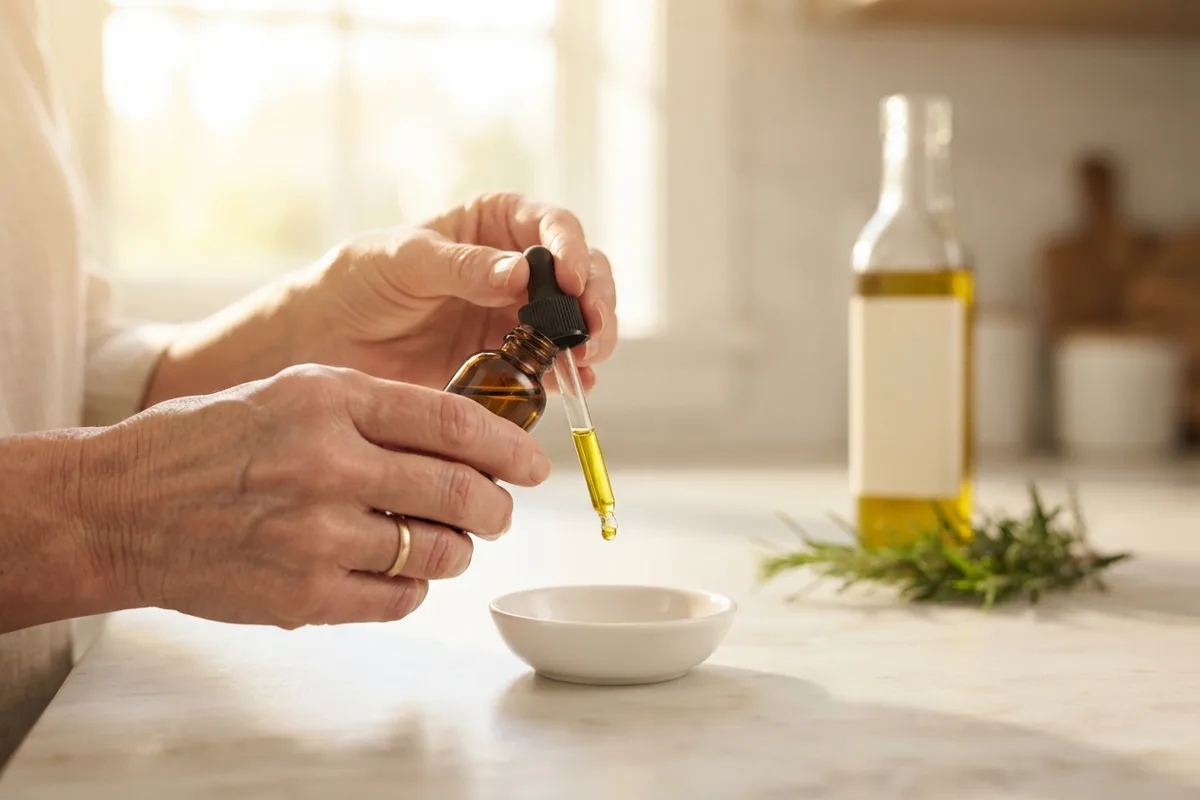
This is the classic that actually holds up. The NHS suggests putting 2 to 3 drops of olive or almond oil in the ear 3 to 4 times a day for 3 to 5 days, and notes that over about two weeks the wax should start to come out on its own. Mayo Clinic lists baby oil, mineral oil, glycerin, or hydrogen peroxide drops for the same job, and the American Academy of Otolaryngology–Head and Neck Surgery (AAO-HNS) guideline accepts cerumenolytic (wax-softening) drops as a reasonable first step. Softened wax can then migrate out on its own or be removed easily by a clinician.
Rules that matter:
- Only use it if you know your eardrum is intact. No recent ear pain, no drainage, no history of ear surgery or perforation.
- Never heat the oil on a stove or in a microwave. Room temperature, or a bottle held in your hand for a minute, is enough. Hot oil can burn the ear canal.
- Lie on your side for a few minutes with the treated ear facing up, then sit up and let excess drain onto a tissue.
- If your ear starts to hurt at any point, stop.
A 2018 Cochrane review of ear drops for removing earwax, which pooled 10 trials with 623 participants, concluded that softening drops may help clear wax compared with no treatment, but that it is not clear whether any one type of drop works better than another, or better than plain water or saline. Side effects reported in the trials were mild, such as slight irritation or discomfort. Which means the cheap, gentle option is usually a reasonable one.
Hydrogen peroxide (3%) for earwax — with real caution
Mayo Clinic includes hydrogen peroxide in its list of drops that can soften earwax, and peroxide-based drops are among the over-the-counter options. Used sparingly, occasionally, and only when the eardrum is intact, it can help loosen wax. The fizzing sensation is normal and comes from the peroxide breaking down as it hits the wax.
The problems start when it becomes a habit. Peroxide is a wax softener for a specific plug, not a daily ear cleaner, and the ear canal’s skin is thin and easy to irritate. If you are considering peroxide as a routine cleaning, don’t. If you use it to soften a specific plug of wax over a few days, stick to the drugstore 3% strength, use only a few drops, and stop if it stings or hurts. Never use it if you have ear tubes or a possible perforation.
Warm compress for outer-ear pain
A warm (not hot) compress or a heating pad set to low, held against the outside of the ear for several minutes, is one of the simplest comfort measures for ear pain. The NHS earache advice lists placing a warm flannel on the ear, alongside ordinary painkillers such as paracetamol or ibuprofen. It doesn’t treat an infection, but it can ease discomfort while you decide whether to see a doctor.
Key caveats: if the ear is hot, red, and swollen on the outside, or if there is any drainage, that is a sign of possible infection and needs medical attention rather than more heat. Warmth is a comfort measure, not a treatment.
Keeping ears dry after swimming or showering
Simple, boring, and effective. After a swim or a shower, tilt the head to each side, tug the earlobe gently, and let water drain. A soft towel corner in the outer ear is fine — do not push anything into the canal. For frequent swimmers, Mayo Clinic describes a homemade drying drop of 1 part white vinegar to 1 part rubbing alcohol, used before and after swimming and allowed to drain back out, to help the ear dry and discourage bacteria and fungi; similar over-the-counter drops exist. Mayo is clear that this is only for people who know they do not have a punctured eardrum, so skip it entirely if you have or might have a perforation or ear tubes.
Chewing, swallowing, and yawning for pressure changes
The eustachian tube — the small drainage tube between the middle ear and the back of the throat — opens with swallowing and yawning. On a plane, in an elevator, or when a cold has left your ears feeling “full,” sipping water, chewing gum, or yawning deliberately is a genuinely useful, entirely free home remedy. Mayo Clinic lists yawning, swallowing, and chewing gum as self-care steps that usually improve airplane ear. It doesn’t treat infection, but for eustachian tube dysfunction and altitude discomfort, it’s the first thing to try.
Which “natural” ear remedies should you avoid?
Avoid ear candling, cotton swabs or other objects pushed into the ear canal, anything hot placed in the ear, undiluted essential oils, and home ear vacuums. Health authorities including the FDA, the NHS, and the American Academy of Otolaryngology warn against several of these, because they can burn, block, or injure the ear without removing wax.
This is the section that matters most. Some folk remedies are marketed as gentle and traditional, and are anything but. These are the ones with the strongest evidence against them.
Ear candling — the one to be blunt about
Ear candling (also called ear coning or thermal-auricular therapy) involves lighting one end of a hollow, wax-coated fabric cone while the other end sits in the ear canal. Sellers claim the “chimney effect” pulls wax, toxins, or debris out of the ear. Research does not back that up. In a 1996 study in The Laryngoscope, ear candles produced no negative pressure (no suction) in an ear-canal model, removed no earwax in a small clinical test, and in some ears actually left candle wax behind.
What ear candling can do is burn you. The same study surveyed 122 ear, nose, and throat doctors, who between them reported 21 ear injuries caused by ear candles. The FDA considers the products dangerous even when used as directed, and the AAO-HNS earwax guideline tells clinicians to recommend against ear candling. There is no medical case for it. If someone in a spa or salon offers it, walk out.
Cotton swabs pushed into the ear canal
The injuries follow a familiar pattern: swabs pushed past the outer ear, packing wax deeper toward the eardrum; swabs slipping and scratching the canal skin; and occasionally, swabs perforating an eardrum outright. MedlinePlus, from the U.S. National Library of Medicine, puts it plainly: never try to clean the ear by putting any object, such as a cotton swab, into the ear canal. The NHS adds that cotton buds push wax in and make it worse.
The ear canal cleans itself. Wax slowly migrates outward, carrying dust and dead skin with it. A cotton swab reverses that flow. Use them on the outside of the outer ear (the visible bowl) if you like, but never inside the canal. This is the same warning we make in our companion article on age-related hearing loss and it’s worth repeating: if your ears feel “waxy,” softening drops are the safer route than digging.
Anything hot inserted into the ear
Hot oil straight from a stove. A steamed onion or garlic clove. Hot compresses inserted into the ear rather than on the outside. All of these can cause burns to the ear canal and eardrum. Warm — barely warmer than the skin — is the ceiling. Anything hotter is a burn risk, and the ear canal is one of the least forgiving places on the body to burn.
Foreign objects to “get the wax out”
Hair pins, keys, matchsticks, ear-picking spoons, and metal “ear scoops” sold online all belong in the same bin. Mayo Clinic’s guidance is explicit: “Never try to dig out excessive or hardened earwax with items such as a paper clip, a cotton swab or a hairpin.” Doing so can push the wax farther in and damage the lining of the ear canal or the eardrum.
Undiluted essential oils — tea tree, oregano, clove
Undiluted essential oils in the ear canal are a bad idea, full stop. Even diluted, most were never intended for ear-canal use. According to the National Center for Complementary and Integrative Health (NCCIH), tea tree oil can cause skin redness and irritation in some people, and its research summary does not list ear infections among the uses with supporting evidence. Popular blog claims that tea tree oil “kills ear infections” are not backed by clinical trials in people. If you have an ear infection, that’s a doctor, not an aromatherapy shelf.
Ear vacuums and DIY irrigation kits
The online market is full of “ear vacuums,” battery-powered wax removers, and DIY irrigation kits with hooked tips. The NHS states there is no evidence that ear candles or ear vacuums get rid of earwax, and MedlinePlus warns against using a jet irrigator designed for cleaning teeth. Instead of a gadget, consider a professional ear cleaning at your primary-care office or an audiology clinic — you’ll get a real look at the eardrum in the process.
Which popular home remedies are harmless but not really proven?
Garlic and mullein oil drops, warm salt or rice socks, and onion poultices fall into this middle group. They are usually low-risk on the outside of the ear or with an intact eardrum, but the evidence is thin and they do not treat infection. Colloidal silver and so-called detox drops deserve more caution.
The middle category is the trickiest — remedies with a long folk tradition, some tolerability data, and thin clinical evidence. They are usually safe if the eardrum is intact, but they aren’t doing what their most enthusiastic fans claim.
Garlic oil ear drops for pain
The best-known study is a 2003 trial in Pediatrics of 171 children aged 5 to 18 with ear pain from middle-ear infections. Herbal ear drops containing garlic, mullein, calendula, and St. John’s wort in olive oil eased pain about as well as standard anesthetic (numbing) drops, with or without antibiotics. But pain went down in every group, the follow-up was short, and the study was not designed to show the drops cured anything. The best honest reading: garlic-based ear drops may ease ear pain in some people and are unlikely to cause harm when the eardrum is intact. They are not treating the underlying infection, though. Persistent pain, fever, or hearing loss needs a real evaluation.
Key rules if you try garlic oil:
- Only if the eardrum is definitely intact.
- Only warmed slightly, never hot.
- Never with a raw clove pushed into the ear. Doctors report removing garlic from patients’ ear canals after it was used as a folk remedy for earache.
- Not as a substitute for medical care if pain lasts more than 2 to 3 days, worsens, or comes with fever, drainage, or hearing loss, which are the warning signs the NHS lists.
Naturopathic mullein oil blends
Same category as garlic oil — often sold together, and mullein was one of the ingredients in the same small pediatric trial. The same rules apply. Treat it as a comfort measure at most.
Onion, potato, or salt-sock “heat therapy”
Warm socks filled with salt or rice, or a slightly warmed piece of cloth over the outside of the ear, is really just a warm compress with a folk name attached. Fine. Onion or potato applied to the outside of the ear does no measurable harm and probably does nothing measurable at all — the heat is doing the work, not the vegetable.
Colloidal silver, apple cider vinegar “detox” drops, and similar
These live at the edge of the unproven category, moving toward the “avoid” bucket. According to NCCIH, the FDA has determined that colloidal silver is not safe or effective for treating any disease or condition, and silver build-up in the body can cause argyria, a bluish-gray skin discoloration that is usually permanent. Apple cider vinegar “detox” drops are a different thing from the measured vinegar-and-alcohol drying mix described above: home-made versions vary in strength, and the ear canal is easy to irritate. If you want a drying drop, use the measured mix or one that is actually made for the ear.
How can you safely clean your ears at home?
Usually you don't need to, because earwax tends to clear on its own. If your ear feels blocked and your eardrum is intact, a few drops of olive oil or over-the-counter softening drops for three to five days is the standard first step. Never push swabs or objects inside, and see a clinician if it doesn't clear.
Most people don’t need to “clean” their ears at all. Earwax has a job: the NIDCD describes it as a secretion that keeps the skin of the ear dry and protected from infection, and the AAO-HNS guideline notes that the ear canal normally cleans itself. If you have no symptoms and your hearing is normal, leaving your ears alone is the right answer.
If your ears do feel plugged, itchy, or your hearing has become muffled, a safe routine looks like this:
- Confirm the eardrum is intact. No recent pain, no drainage, no history of a perforation, no ear tubes, no recent ear surgery. If you are unsure, or you have diabetes or a weakened immune system, book an appointment instead.
- Soften with drops for three to five days. Olive oil, mineral oil, or an over-the-counter softening drop. The NHS suggests 2 to 3 drops of olive or almond oil, 3 to 4 times a day.
- Let gravity do the work. Lie on your side for a few minutes, then sit up and let excess drain onto a tissue.
- Optionally rinse with warm water. After a few days of softening, some people gently rinse the outer canal with a rubber-bulb syringe, as Mayo Clinic describes. Use body-temperature water, because MedlinePlus notes cooler water can cause brief but severe dizziness. Only do this if you have no history of a perforation, no ear tubes, and no ear pain.
- Dry the outer ear. A soft towel corner on the outside — never a swab pushed inside.
- Stop if anything hurts. Any pain, dizziness, or new hearing change is a signal to stop and see someone.
If the blockage has not eased after a couple of weeks, or if the ear starts to hurt at any point, the safest step is a clinic visit. In-office wax removal by a clinician — with an otoscope in view — is usually quick and straightforward.
What daily habits actually support long-term ear health?
Protecting your ears from loud noise is one of the most important habits, along with keeping ears dry, leaving earwax alone, and looking after your heart and blood vessels. A baseline hearing test and prompt attention to persistent ringing also help. None of these habits involves putting anything inside the ear canal.
Home remedies are for specific, mild problems. The bigger driver of long-term ear and hearing health is what you do most days — none of which involves anything going into your ear.
- Protect against loud noise. Foam earplugs at concerts, mowing the lawn, or using power tools. How loud sound damages the inner ear is covered in our guide to noise-induced hearing loss.
- Go easy on headphone volume. Keep the volume moderate and take regular listening breaks, especially in noisy places where it is tempting to turn it up.
- Support inner-ear circulation. Keep blood pressure managed, don’t smoke, stay hydrated, and move most days. The cochlea depends on steady blood flow through very small vessels.
- Cover the nutritional basics. B12, folate, magnesium, omega-3s, and antioxidants show up repeatedly in the inner-ear literature. Our overview of the best vitamins and nutrients for ear health covers what the evidence actually supports.
- Manage recurring allergies. Chronic eustachian tube dysfunction from allergic congestion is a common driver of “muffled ears” that no amount of oil drops will fix.
- Get a baseline hearing test. One clean audiogram in your 30s or 40s gives you a real reference point later. Most primary-care offices can refer you locally.
- Take persistent tinnitus seriously. Ringing that lasts more than a few days is a signal, not a nuisance.
Audifort: a supplement taken by mouth — not something you put in your ear
Audifort is a liquid drop supplement, but the drops are meant to be taken by mouth as a daily nutritional supplement — not applied inside the ear. It combines B-complex vitamins with plant extracts that its maker says are meant to support inner-ear circulation and nerve health. It is not a medicine or a medical device: it does not remove earwax, treat an ear infection, or replace a hearing test or a doctor’s visit. A supplement supports, never replaces, the basics on this page, and results vary from person to person. It comes with a 90-day money-back guarantee.
Read our full Audifort review → Our review page contains affiliate links. If you buy through them, Better Hearing Daily may earn a small commission at no extra cost to you. This does not change our editorial view.When should you skip home remedies and see a doctor?
See a doctor promptly for severe or worsening ear pain, fluid or blood coming from the ear, sudden hearing loss, dizziness, high fever, swelling around the ear, or an object stuck inside. The NHS also advises getting help if earache lasts more than two to three days. Sudden hearing loss is a medical emergency.
Home care is for small, uncomplicated ear problems in adults with a known-intact eardrum. Everything else needs eyes and instruments. See a healthcare professional promptly if any of the following are true:
- Severe or worsening ear pain, especially in a child.
- Drainage or bleeding from the ear.
- Sudden hearing loss in one or both ears.
- Dizziness, vertigo, or loss of balance.
- A high fever alongside ear symptoms.
- Swelling around the ear.
- A foreign object stuck in the ear.
- Any suspicion of a ruptured eardrum — a sharp pop followed by pain, drainage, or muffled hearing.
- Earache lasting more than 2 to 3 days, or other symptoms persisting despite safe home care (NHS).
Sudden hearing loss in particular is a medical emergency. The NIDCD advises seeing a doctor immediately, because delaying diagnosis and treatment can make treatment less effective. If your hearing dropped overnight, do not spend a week trying home drops. Get seen that day.
The rest of the time, the honest truth is that ears are remarkably self-sufficient. A few boring habits — protect against noise, keep them dry, don’t push anything into the canal, feed the body well, get checked when something changes — do more for your long-term hearing than any drawer full of natural remedies ever will.
Frequently asked questions
Are natural home remedies for ear health actually safe?
Is ear candling a safe way to remove earwax?
Does putting olive oil in your ear really soften earwax?
Is garlic oil a proven remedy for ear infections?
Can I use hydrogen peroxide to clean my ears at home?
When should I stop trying home remedies and see a doctor about my ear?
A supplement supports — never replaces — the basics
Nothing in this article’s home-remedy list is a long-term hearing plan. The long-term work is protecting against loud noise, keeping cardiovascular health steady, and covering the nutrients the inner ear depends on. If you want a daily supplement to add on top of those habits — clearly separate from anything you would put in your ear — Audifort is the one we reviewed in detail. Results vary, and it is not a treatment for any ear condition. The maker offers a 90-day money-back guarantee.
Read our full Audifort review → Our review page contains affiliate links. If you buy through them, Better Hearing Daily may earn a small commission at no extra cost to you. This does not change our editorial view.