Best Vitamins and Nutrients for Ear Health (Research-Backed)
 By Emily Carter
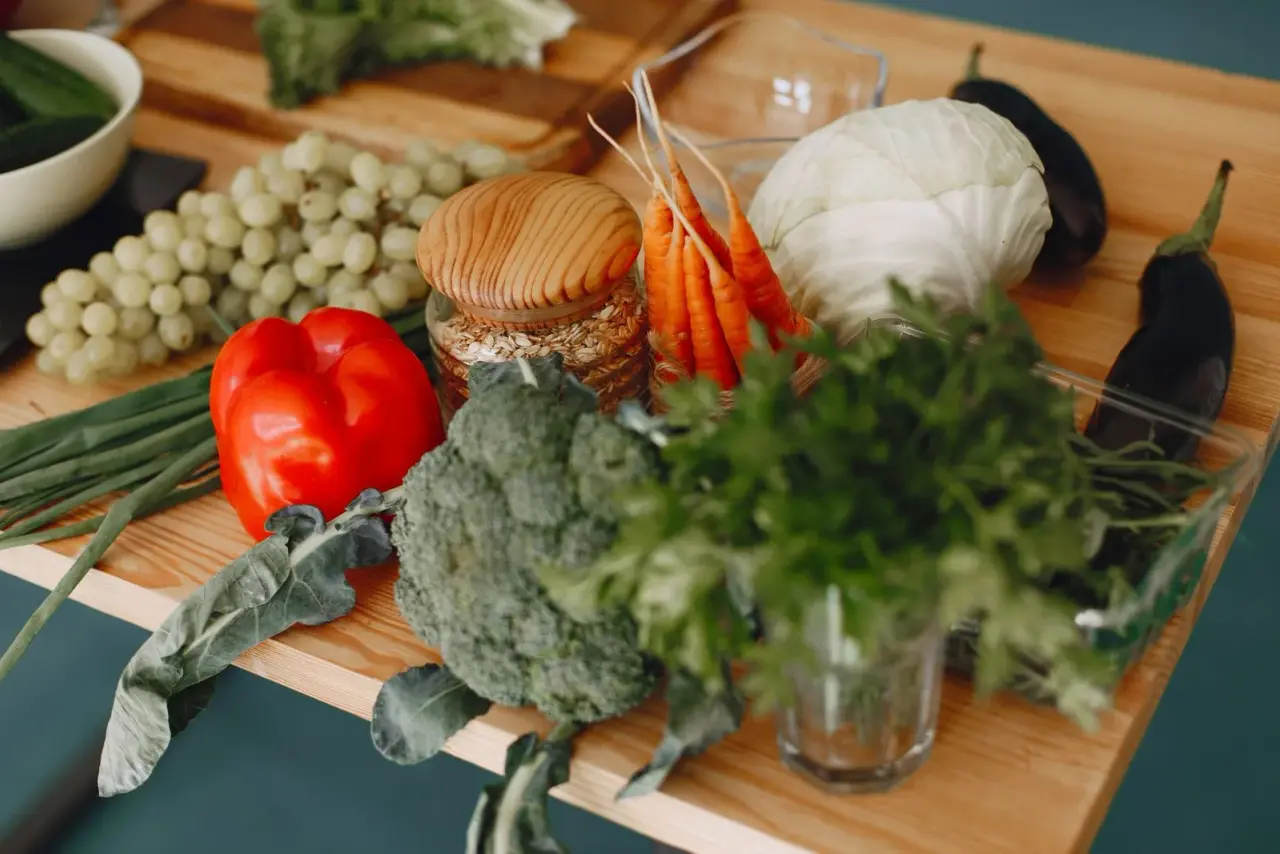
The nutrients most linked to ear health show up more in whole foods than in pills. Photo: Gustavo Fring / Pexels.
The vitamins with the strongest research links to ear health are B12, folate, magnesium, vitamin D, and omega-3 fatty acids. They will not reverse hearing loss, but correcting deficiencies can slow decline, support the auditory nerve, and in some cases reduce tinnitus. Food-first, supplements second — and always with your doctor's input.
The internet loves to sell "hearing vitamins." Actual scientists are more careful. The truth sits somewhere in between: a small handful of nutrients really do show up again and again in the hearing research, and running low on them can quietly affect the inner ear and auditory nerve. Correcting a genuine deficiency can help. Loading up on supplements with no deficiency behind them mostly helps the supplement company.
Here is what the science actually says — nutrient by nutrient — so you can make a real decision instead of a marketing one.
How does nutrition even affect ear health?
The inner ear depends on steady, oxygen-rich blood flow and healthy nerves. Nutrients that support circulation, nerve health, and cellular repair tend to support long-term ear health, while high blood sugar, high blood pressure, chronic inflammation, and vitamin deficiencies work against it. A heart-healthy diet is largely good for your hearing too.
The inner ear is a demanding tissue. It uses a steady, oxygen-rich blood supply to keep its sensory hair cells alive, and it relies on healthy nerves to carry signals to the brain. Anything that supports blood flow, nerve health, and cellular repair also tends to support long-term ear health. Anything that damages those systems — high blood sugar, high blood pressure, chronic inflammation, deficiencies of key vitamins — tends to work against it.
That is why cardiologists, endocrinologists, and hearing researchers keep landing on similar recommendations: the diet that is good for your heart is largely good for your ears too.
Why does vitamin B12 matter for hearing?
Vitamin B12 has the strongest evidence of any single nutrient linked to hearing. It maintains the myelin sheath that insulates nerves, including the auditory nerve. A 2025 systematic review found that most included studies showed significant hearing differences in people with lower B12 levels, though only a blood test can tell you yours.
Vitamin B12 has the strongest, most consistent evidence base of any single nutrient linked to hearing. It is essential for the health of the myelin sheath — the insulation around your nerves, including the auditory nerve. Without enough B12, nerve signals fire less reliably.
Vitamin B12 shows up repeatedly in the hearing-loss literature. A 2025 systematic review in the Ear, Nose & Throat Journal (Rodrigues, Anand, Ravi et al.) screened 612 studies and included 9 that met the criteria for analysis. Most of those studies found statistically significant differences in hearing thresholds among people with lower B12 levels — particularly in older adults, and often accompanied by elevated homocysteine and low folate. Results varied by the frequency range tested, but the direction of the association was consistent.
Food sources: beef, salmon, tuna, sardines, eggs, dairy, fortified cereals, and nutritional yeast. Adults over 50 absorb B12 less efficiently, which is why many audiologists gently suggest a blood test as part of the workup.
What does folate do for the ears?
Folate (vitamin B9) works with B12 to process homocysteine, an amino acid that can damage blood vessels, including the tiny ones feeding the cochlea. Studies of adults with age-related hearing loss have found lower folate and higher homocysteine than in peers with normal hearing. Good sources include leafy greens, lentils, chickpeas, and avocado.
Folate (vitamin B9) works closely with B12 to metabolize an amino acid called homocysteine. When homocysteine builds up, it damages blood vessels — including the tiny ones feeding the cochlea. Studies of adults with age-related hearing loss have found lower folate levels and higher homocysteine compared with peers of the same age with normal hearing.
Food sources: leafy greens (spinach, kale, romaine), lentils, chickpeas, black beans, asparagus, avocado, and citrus fruit.
Can magnesium protect against noise damage?
Possibly, in certain situations. Small clinical trials found that taking magnesium before loud noise exposure, such as military weapons training, reduced temporary and permanent hearing loss. It appears to protect the inner ear by regulating calcium flow in sensory cells. This is early evidence, not a guarantee, and not a substitute for ear protection.
This is one of the more interesting stories in hearing research. Small clinical trials have found that pre-loading magnesium before loud noise exposure — think military training with heavy weapons — reduced the rate of temporary and permanent hearing loss. Magnesium appears to protect the inner ear by regulating calcium flow inside sensory cells, which is part of what goes wrong under intense noise. It is no replacement for protection, though: our guide to noise-induced hearing loss shows how to keep loud sound from doing the damage in the first place.
Food sources: dark leafy greens, pumpkin seeds, almonds, cashews, black beans, dark chocolate (70%+), avocado, and whole grains. Deficiency is more common than most people realize.
Where does vitamin D fit in?
Low vitamin D has been linked to otosclerosis, a rare hearing loss caused by abnormal bone growth in the middle ear, and vitamin D supports immune function and reduces inflammation. Many American adults are below the recommended intake, especially in winter. A blood test is the only reliable way to know your level.
Low vitamin D has been linked to a rare form of hearing loss called otosclerosis, in which abnormal bone growth in the middle ear disrupts sound transmission. More broadly, vitamin D supports immune function and reduces inflammation, both of which matter for chronic ear conditions. Most American adults are at or below the recommended daily intake, and many are frankly deficient — especially in winter and at higher latitudes. Vitamin D also comes up in balance research; our guide to supplements and vitamins for vertigo after 50 explains what it can and cannot do.
Food and sources: fatty fish (salmon, mackerel, sardines), egg yolks, fortified milk and orange juice, and — importantly — sunlight. A blood test is the only reliable way to know your level.
What about omega-3 fatty acids?
It looks promising. In the Blue Mountains Hearing Study of 2,956 Australian adults over 50, people who ate fish at least twice a week had a 42% lower risk of age-related hearing loss than those who ate fish less than once a week. Omega-3s reduce inflammation and support blood vessels and nerve cells.
The Blue Mountains Hearing Study — a widely cited population study of 2,956 Australian adults over 50, published in the American Journal of Clinical Nutrition in 2010 — found that people who ate fish at least twice a week had a 42% lower risk of age-related hearing loss than those who ate fish less than once a week. Omega-3s (EPA and DHA) reduce inflammation, support blood vessel health, and are structural components of nerve cells.
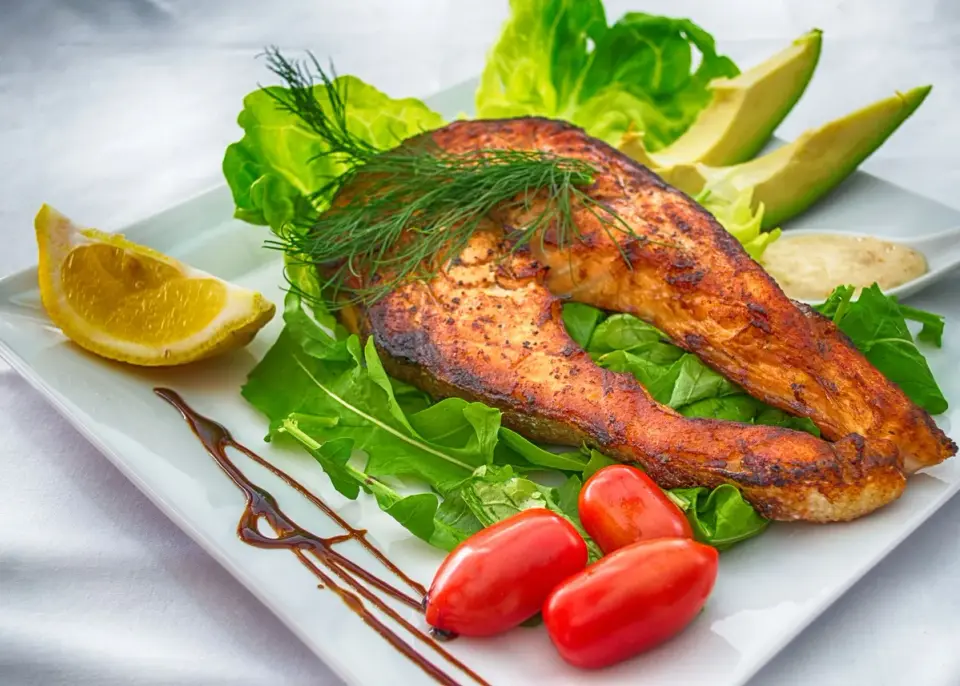
Food sources: salmon, sardines, mackerel, herring, anchovies, flaxseed, chia seed, and walnuts.
Is zinc really useful for hearing?
Probably only if you are deficient. Zinc matters for inner-ear enzyme function and early studies suggested it could ease tinnitus, but larger reviews were cautious: a 2016 review found most participants noticed no meaningful difference. Zinc likely helps people with a true deficiency and does little for everyone else.
Zinc is genuinely important for inner-ear enzyme function, and some early studies suggested that zinc supplementation could ease tinnitus. Larger reviews, however, have been much more cautious. A 2016 review concluded that most participants noticed no meaningful difference from supplementation, and the authors recommended against routinely prescribing dietary supplements for tinnitus.
The most likely interpretation: zinc probably helps if you are deficient, and does little otherwise. That is not nothing — but it is not a magic pill either.
Food sources: oysters (by far the richest source), beef, pumpkin seeds, chickpeas, lentils, cashews, and yogurt.
Which antioxidants get honorable mention?
Vitamin C, vitamin E, vitamin A or beta-carotene, and coenzyme Q10. Vitamin E protects cell membranes from oxidative stress, a mechanism of age-related hearing loss, and vitamin C supports capillary strength. Vitamin A is linked to lower risk in observational studies, while Q10 has shown modest, mixed results for tinnitus.
- Vitamin C — supports capillary strength and is often paired with vitamin E in ear-health formulas.
- Vitamin E — protects cell membranes from oxidative stress, which is one of the mechanisms of age-related hearing loss.
- Vitamin A / beta-carotene — associated with lower risk of hearing loss in several observational studies.
- Coenzyme Q10 — small trials have looked at Q10 for tinnitus with modest, mixed results.
The nutrients at a glance
Here is the short version of everything above — with the strength of the current evidence and where to get each nutrient from real food.
| Nutrient | What it does for the ear | Strength of evidence | Best food sources |
|---|---|---|---|
| Vitamin B12 | Supports auditory nerve myelin; deficiency linked to tinnitus and noise-induced hearing loss. | Strong | Salmon, tuna, sardines, beef, eggs, dairy, fortified cereals, nutritional yeast. |
| Folate (B9) | Works with B12 to lower homocysteine, protecting inner-ear blood vessels. | Moderate | Leafy greens, lentils, chickpeas, black beans, asparagus, avocado, citrus. |
| Magnesium | May protect against noise damage by regulating calcium flow in sensory cells. | Moderate | Pumpkin seeds, almonds, cashews, dark leafy greens, black beans, dark chocolate, whole grains. |
| Vitamin D | Supports immune function; low levels linked to otosclerosis and chronic ear conditions. | Moderate | Fatty fish, egg yolks, fortified milk and orange juice, sunlight. |
| Omega-3 (EPA/DHA) | Reduces inflammation and supports vascular health of the cochlea; two servings of fish per week linked to 42% lower risk of age-related hearing loss. | Strong | Salmon, sardines, mackerel, herring, anchovies, flaxseed, chia, walnuts. |
| Zinc | Involved in inner-ear enzyme function; some small studies suggest a tinnitus benefit but larger reviews are inconclusive. | Mixed | Oysters, beef, pumpkin seeds, chickpeas, lentils, cashews, yogurt. |
| Vitamins C & E | Antioxidant protection of inner-ear cell membranes and small blood vessels. | Moderate | Citrus, bell peppers, berries, kiwi, nuts, seeds, wheat germ, vegetable oils. |
Should I focus on food or supplements for ear health?
Food first. Every nutrient discussed here is available in ordinary meals, along with fiber and cofactors that pills cannot replicate. A weekly mix of fatty fish, leafy greens, nuts and seeds, eggs or dairy, whole grains, beans, and colorful produce covers most needs. Supplements can help fill real gaps.
Food, first. Every single nutrient above is available in ordinary meals, and food comes with the additional fiber, cofactors, and satiety that pills cannot replicate. A rough weekly template that covers most of what your ears need for long-term ear health:
- Fatty fish twice a week (salmon, sardines, mackerel).
- Leafy greens daily (spinach, kale, arugula).
- Nuts and seeds most days (pumpkin, almonds, chia, flax).
- Eggs and/or dairy for B12 unless plant-based.
- Whole grains and beans for magnesium and folate.
- Colorful vegetables and fruit at every meal for antioxidants.
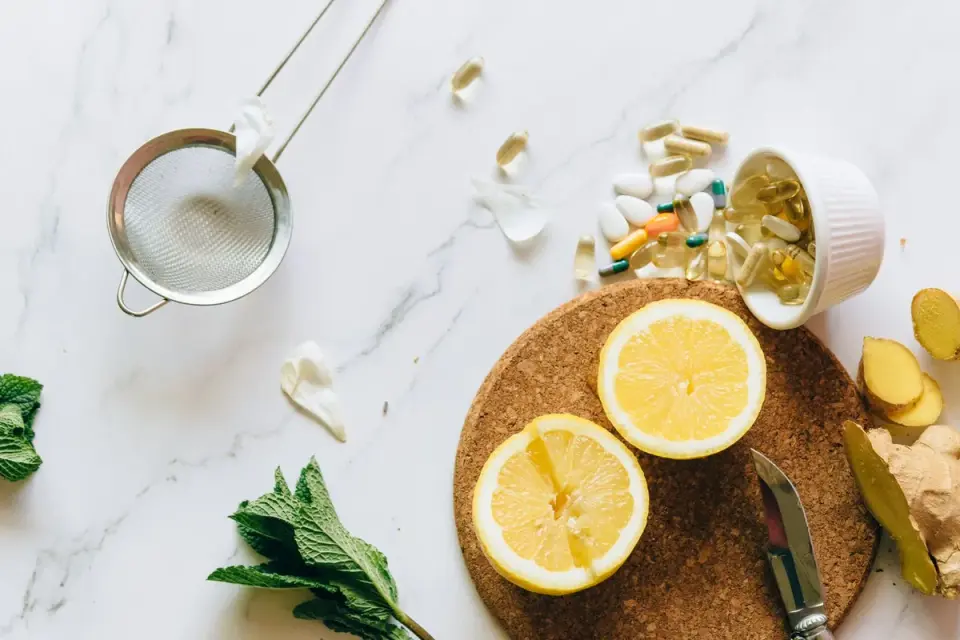
Supplements have a role too, especially if:
- A blood test shows a deficiency (most common: B12, D, magnesium).
- Your diet is restrictive (vegan, low-calorie, limited variety).
- You are over 50 and absorb B12 less efficiently.
- You want a research-based layer to add on top of the basics.
A good supplement is transparent about its ingredient list, honest about what the research does and does not show, and backed by a return policy so you can try it without committing blindly. Anything promising to "cure hearing loss" is a red flag, full stop. Our guide to the myths and facts about natural hearing supplements sorts the common claims from the evidence.
Audifort: a liquid drop supplement built around ear-supportive nutrients
Audifort is a natural liquid formula that includes several ingredients from the evidence base above — including B-complex nutrients and plant extracts associated with inner-ear circulation. It is not a medical treatment and it will not reverse presbycusis, but if you have already covered the basics (protection, diet, hearing test) and want to add a low-risk daily habit, it is one of the more transparent options we've reviewed. The company offers a 90-day money-back guarantee.
Read our full Audifort review → Our review page contains affiliate links. If you buy through them, Better Hearing Daily may earn a small commission at no extra cost to you. This does not change our editorial view.What foods and habits work against your hearing?
Excess salt, which raises blood pressure and worsens Ménière's disease; excess sugar, which contributes to insulin resistance and vascular damage; smoking, which accelerates hearing loss; heavy alcohol; and chronic dehydration, which upsets the fluid balance the inner ear depends on. Sometimes subtracting works better than adding.
Sometimes the most useful move is not adding but subtracting.
- Excess salt raises blood pressure and worsens Ménière's disease.
- Excess sugar contributes to insulin resistance and vascular damage — bad for the cochlea over time.
- Smoking is repeatedly shown to accelerate hearing loss.
- Heavy alcohol can damage the auditory cortex.
- Chronic dehydration reduces the fluid balance the inner ear depends on.
Combined with the practical protections in our age-related hearing loss guide and the sound-therapy and management strategies in our tinnitus guide, nutrition becomes one leg of a very sturdy three-legged stool.