Age-Related Hearing Loss: Signs, Causes, and What You Can Do
 By Emily Carter

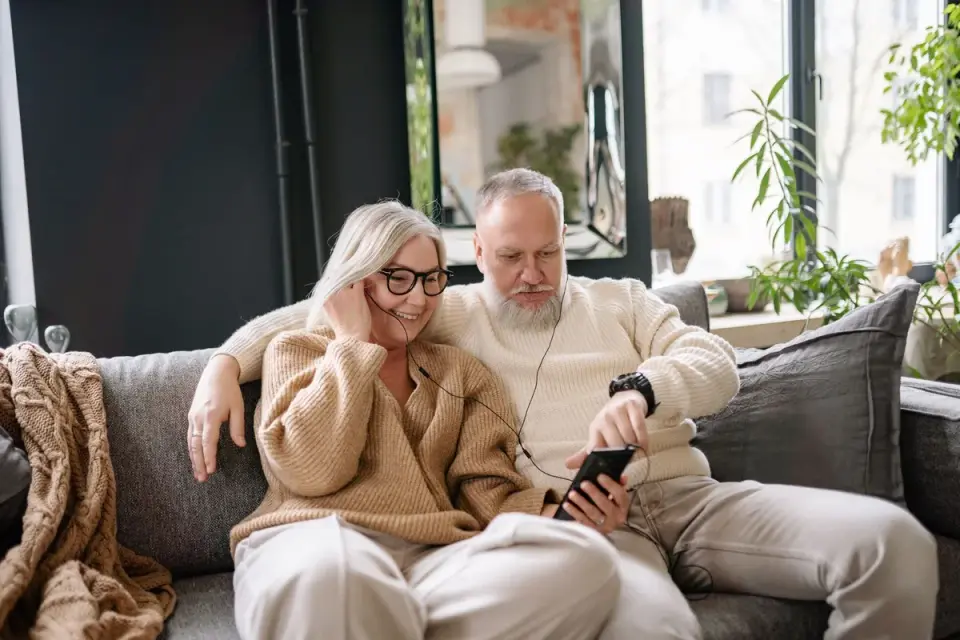
One in three American adults between 65 and 74 has some degree of hearing loss. Photo: Kampus Production / Pexels.
Age-related hearing loss, or presbycusis, is a gradual decline in hearing that usually starts in your 50s or 60s. It affects the tiny sensory cells inside the inner ear and cannot be reversed, but hearing aids, protective habits, and treatment of underlying conditions can meaningfully improve day-to-day hearing.
If you have noticed yourself turning the TV up a little louder, asking your partner to repeat what they just said, or feeling drained after a family dinner in a busy restaurant, you are not imagining it. Millions of adults quietly notice the same shift somewhere between their 50s and their 70s. It is called age-related hearing loss, and it is one of the most common conditions of aging in the United States.
The good news is this: even though the physical changes cannot be undone, there are practical, evidence-backed things you can do at every stage. This guide walks through the signs, the causes, the numbers, and the options — clearly and without the jargon.
What is age-related hearing loss?
Age-related hearing loss, called presbycusis, is the slow, gradual loss of hearing that happens as we get older. It starts in the tiny sensory hair cells of the inner ear, which are damaged over decades and do not regrow. Higher-pitched sounds usually fade first.
Age-related hearing loss is called presbycusis in medical language. It is the slow, gradual loss of hearing that happens as we get older, and it is different from the sudden hearing loss you might notice after a very loud concert or an ear infection.
The change starts in the inner ear, specifically in tiny hair-like sensory cells inside a spiral-shaped structure called the cochlea. Those cells convert sound vibrations into signals your brain can understand. Over decades, they get damaged by everyday exposure to noise, blood flow changes, genetics, and normal wear. Humans do not regrow these cells, which is why the loss is permanent.
Usually the higher-pitched sounds go first — the "s," "sh," and "th" consonants, women's and children's voices, birds, doorbells. Deeper voices and low tones tend to stay intact longer. That is why so many people say their spouse "mumbles" long before they realize their own ears have changed.
How common is age-related hearing loss?
It is very common. According to the NIDCD, about one in three American adults aged 65 to 74 has some hearing loss, and nearly half of adults over 75 have difficulty hearing. The World Health Organization estimates that about a third of people over 65 worldwide are affected.
Much more common than most people think. According to the National Institute on Deafness and Other Communication Disorders (NIDCD), roughly one in three American adults between ages 65 and 74 has some degree of hearing loss, and nearly half of adults over 75 have difficulty hearing. Globally, the World Health Organization estimates that about one third of people over 65 are affected.
What makes this striking is how quiet the epidemic is. Many people wait years — often seven to ten — between noticing early symptoms and doing something about them. Part of that is habit. Part of it is stigma. And part is that the decline is so slow you can adapt without realizing what you are adapting to.
What causes hearing loss as we age?
It is rarely caused by one thing. The main contributors are aging of the inner ear, years of cumulative noise exposure, genetics, and health conditions such as diabetes, high blood pressure, and cardiovascular disease. The CDC and NIOSH classify sound above 85 dB as hazardous with prolonged exposure.
Presbycusis is almost never caused by a single thing. It is the sum of years, exposures, and genetics working together. Researchers point to a few main contributors:
- Aging of the inner ear. Sensory hair cells and the auditory nerve slowly change with time, and blood flow to the cochlea can decline.
- Cumulative noise exposure. Decades of loud environments — factories, concerts, motorcycles, headphones — damage those hair cells. The CDC and NIOSH classify sound above 85 dB as hazardous with prolonged exposure. Our guide to noise-induced hearing loss explains how loud sound damages the ear and how to protect it.
- Genetics. If your parents or siblings lost hearing early, your risk is higher.
- Health conditions. Diabetes, high blood pressure, cardiovascular disease, and certain autoimmune conditions are all linked to faster hearing decline.
- Medications. Some antibiotics, high-dose aspirin, chemotherapy drugs, and certain diuretics can be "ototoxic" — toxic to the inner ear.
- Smoking. Studies consistently show smokers lose hearing faster than non-smokers.
It helps to think of your ears less like a switch and more like a joint. Every conversation on a noisy sidewalk, every band you saw at 22, every ear infection you shook off — small deposits into a very long story.
How do you know if your hearing is changing?
Most people notice the effects before the loss itself: asking others to repeat themselves, struggling to follow conversations in noisy places, turning up the TV, feeling exhausted after social events, missing everyday sounds, or hearing persistent ringing. If several of these sound familiar, consider booking a hearing test.
Here is the tricky part. Because it happens so slowly, most people notice the effects before they notice the loss itself. Look for patterns like these:
- Asking family or friends to repeat themselves more than a few times per conversation.
- Trouble following a conversation in a restaurant, on speakerphone, or with background music.
- Turning the TV or radio up to a level others find loud.
- Feeling mentally exhausted after social gatherings — a big sign that your brain is working overtime to fill in missing sounds.
- Missing the doorbell, the microwave beep, or the birds outside.
- A persistent ringing, buzzing, or whooshing sound (tinnitus) — often the earliest hint.
- Voices sounding muffled, especially higher-pitched voices.
If two or more of those feel familiar, it is worth reading our companion piece on the specific causes of tinnitus and what actually helps, and then booking a hearing test. A basic screening is quick, painless, and often free through community programs and pharmacies.
Can age-related hearing loss be reversed?
No. The damaged hair cells in the cochlea do not grow back in humans, and regeneration research is still years from clinical use. What can improve is your day-to-day hearing: hearing aids, assistive devices, and treating contributing conditions can make a real, meaningful difference in conversations and daily life.
Honestly, no — not in the sense of turning the ear back to how it was at 25. The damaged hair cells inside the cochlea do not grow back in humans. Research on regeneration is genuinely exciting but still years away from any clinical treatment.
What can be improved is your day-to-day hearing experience. That is a real, meaningful difference, and it is the goal of any thoughtful plan.
What actually helps as we get older?
The best approach combines hearing tests and professional evaluation, hearing aids or assistive devices when needed, protecting the hearing you still have, and looking after general health and nutrition. None is a magic fix, but together they add up. Adults over 50 should have their hearing tested every three years.
The best approaches combine medical support, protective habits, and attention to overall health. None of them are magic. Together they add up.
Hearing tests and professional evaluation
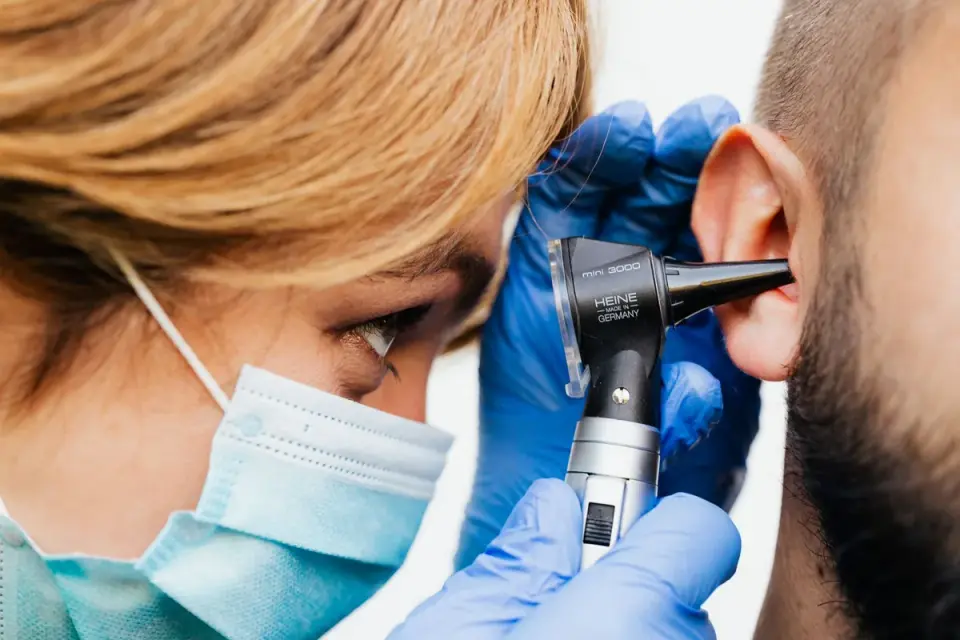
The American Speech-Language-Hearing Association recommends that adults over 50 have a hearing test every three years, even without symptoms. An audiologist can measure exactly where and how much hearing has changed — information you cannot get by guessing. Our guide to what to expect at your first hearing test walks through the visit step by step.
Hearing aids and assistive devices
Modern hearing aids have almost nothing in common with the whistling beige devices from the 1990s. Today's models are small, rechargeable, connect to smartphones, and use algorithms to separate speech from background noise. Since 2022, some models are also available over the counter in the U.S., which has meaningfully lowered the cost of entry. For a side-by-side look at what each can and cannot do, see our guide to hearing aids vs. natural support.
Protecting the hearing you still have
This is the most cost-free and most underrated step. Foam earplugs at concerts, lawn work, and on the plane. Volume-limited headphones. The "60/60 rule" — no more than 60% volume for no more than 60 minutes at a time.
Nutrition and general health
The inner ear needs steady blood flow to work. That means anything good for your cardiovascular system tends to be good for your ears too: managed blood pressure, controlled blood sugar, regular movement, and a diet rich in leafy greens, whole grains, fatty fish, and colorful vegetables.
Certain nutrients have specific links to hearing. A study indexed by the National Library of Medicine found that patients with tinnitus and noise-induced hearing loss had vitamin B12 deficiency at nearly twice the rate of people with normal hearing. Folate, magnesium, and omega-3 fatty acids also show up repeatedly in the research. We dig into the details in our companion guide to the best vitamins and nutrients for ear health.
Natural supplements — the honest picture
Standalone supplements are not a proven cure for presbycusis, and any product that promises one is worth skipping. That said, when a real deficiency exists, correcting it can support the ear along with the rest of the body. If you are curious about natural formulations, look for products that publish their full ingredient list, avoid dramatic claims, and offer a money-back window so you can try without risk.
Audifort: a liquid drop formula built around ear-supportive nutrients
Audifort combines several plant extracts and B-complex nutrients associated in the research with ear health — including ingredients linked to inner-ear blood flow and nerve function. It is not a medical device and it will not replace an audiologist visit, but if you want a natural daily habit to layer on top of the basics, it is one of the more transparent options on the market. It also comes with a 90-day money-back guarantee.
Read our full Audifort review → Our review page contains affiliate links. If you buy through them, Better Hearing Daily may earn a small commission at no extra cost to you. This does not change our editorial view.When should you see an audiologist?
Sooner than most people expect. Book an appointment if two or more people mention your TV volume or your constant "what?", or if you have persistent ringing, ear pain, dizziness, a family history of early hearing loss, or heavy noise exposure. Sudden hearing loss in one or both ears is a medical urgency.
Sooner than you probably want to. A rough rule: if two or more people in your life have gently mentioned your TV volume or your "what?" reflex, it is time. Other reasons to book an appointment sooner rather than later:
- Sudden hearing loss in one or both ears — this is a medical urgency.
- Persistent ringing or ear pain.
- Dizziness or balance problems along with hearing changes.
- A family history of early hearing loss.
- Any period of significant noise exposure — construction, military service, orchestras.
Hearing tests are quick and painless. You sit in a soundproof booth wearing headphones, press a button when you hear a tone, and repeat a few words. That is essentially it.
Living well with hearing loss — small daily habits
Some of the biggest quality-of-life wins come from very small changes:
- Face the person you are talking to. Even mild lip reading fills in a surprising amount.
- Pick your seat. Sit with your back to a wall, away from the kitchen or the door — background noise is the real enemy.
- Ask for the light. A well-lit face is easier to "hear."
- Turn on captions. On TVs, phones, and even video calls. It reduces the mental load enormously.
- Rest your ears. After noisy environments, take a quiet break of at least 15 minutes. Your ears recover better than you think when given a chance.
- Keep moving. Regular walking supports the small blood vessels that feed the inner ear.
- Talk about it. The people around you cannot adjust if they do not know.
Age-related hearing loss is not a personal failing. It is not a sign of decline you have to hide. It is a change — and like most changes in a body that has carried you for decades, it responds well to attention, patience, and a plan.
Frequently asked questions
At what age does hearing loss usually start?
Is age-related hearing loss reversible?
Can supplements actually help with age-related hearing loss?
What is the difference between age-related and noise-induced hearing loss?
When should I see an audiologist?
A supplement can support — never replace — the basics
Protect your ears from loud sounds, keep your blood pressure and blood sugar in check, get tested every few years, and eat foods that feed your inner ear. If you want a natural supplement to layer on top, Audifort is one of the more transparent liquid formulas we've reviewed. Try it with the 90-day guarantee if you're curious.
Read our full Audifort review → Our review page contains affiliate links. If you buy through them, Better Hearing Daily may earn a small commission at no extra cost to you. This does not change our editorial view.