Hearing Aids vs. Natural Support: The Real Differences
 By Emily Carter

A hearing aid amplifies the sounds an inner ear can no longer catch on its own — something no supplement or diet is designed to do.
Hearing aids and natural support solve two different problems. Hearing aids are FDA-regulated medical devices that amplify sound for people with real hearing loss — nothing else replaces them. Natural support (nutrients, habits, and thoughtful supplements) helps keep inner-ear tissue healthy but cannot amplify a lost signal. Most people who need help benefit from both.
If you have ever typed "hearing aids vs. natural support" into a search bar, chances are you were doing what a lot of adults do somewhere between their 50s and their 70s: quietly weighing whether a pair of hearing aids that can cost thousands of dollars is really necessary when a bottle of drops online seems to promise the same result. It is a fair question. It is also — bluntly — the wrong comparison.
A hearing aid and a natural supplement are not two paths to the same destination. They are two different tools for two different jobs. This guide walks through exactly what each one does, what neither one does, when a hearing aid is genuinely the only real answer, and where nutrition and natural support fit honestly into a long-term hearing plan.
What is the real difference between hearing aids and natural support?
Hearing aids amplify sound that a damaged inner ear can no longer pick up, while natural support only helps keep the remaining ear tissue healthy. Supplements and diet cannot amplify sound or regrow lost hair cells, which do not grow back in humans. The two are different tools for different jobs, not rivals.
The single most important sentence in this article: a hearing aid amplifies sound your inner ear can no longer detect. A supplement or natural remedy does not. Everything else flows from that.
Age-related and noise-induced hearing loss both start inside the cochlea, a snail-shaped structure in the inner ear lined with thousands of microscopic sensory cells called hair cells. Those cells convert sound vibrations into electrical signals your brain reads as language, music, and warning. Over time — from years of loud noise, from vascular changes, from genetics, from ordinary aging — those cells get damaged. In humans, they do not grow back, according to the NIDCD. Our companion piece on age-related hearing loss covers the biology in detail.
When enough hair cells are gone, incoming sound simply does not get converted anymore. The brain never hears it in the first place. That is not a nutrient problem. It is a signal problem, and the only fix that exists in 2026 is either a device that amplifies the remaining signal (a hearing aid) or, for very severe cases, a cochlear implant that bypasses the damaged cells entirely.
Natural support — B vitamins, magnesium, omega-3s, plant extracts, blood-pressure control, quality sleep — works upstream, before damage has fully taken root. It keeps the still-living cells fed, the vasculature open, and the nerves communicating cleanly. It cannot resurrect the cells that are gone. Framed clearly, a hearing aid is an output tool and natural support is an upstream habit. They are not rivals. They just do different work.
How do modern hearing aids actually work?
A modern hearing aid is a tiny computer. A microphone picks up sound, a digital processor boosts the frequencies your ear is missing and reduces background noise, and a speaker delivers the shaped sound into the ear canal. Prescription models are fitted by a professional, while over-the-counter models suit adults with perceived mild-to-moderate loss.
Today's hearing aids have essentially nothing in common with the whistling beige devices most people picture. A modern hearing aid is a miniature computer with three basic parts: a microphone that catches sound, a digital signal processor that separates speech from background noise and boosts the specific frequencies your ear is missing, and a tiny speaker that delivers the shaped signal into your ear canal.
Because they process the sound frequency by frequency, they can raise the volume on the "s," "sh," "th," and higher-pitched voices most damaged ears cannot catch, without blowing out the lower tones you still hear well. Many models also connect by Bluetooth to phones and televisions, use rechargeable batteries, cancel background noise algorithmically, and adjust automatically to different environments — from a quiet living room to a busy restaurant.
There are two big categories:
- Prescription hearing aids — fitted by an audiologist after a full audiogram. Custom-programmed to your exact hearing profile, with follow-up adjustments. Usually the right choice for moderate-to-severe loss, single-sided loss, complex loss shapes, or any hearing loss where accuracy matters (musicians, professionals in loud environments, active drivers).
- Over-the-counter (OTC) hearing aids — allowed in the United States under an FDA rule that took effect on October 17, 2022. Available at pharmacies and online without a prescription. Intended for adults 18 and older with perceived mild-to-moderate loss, not for severe loss. Not a full replacement for professional fitting, but a meaningful, lower-cost entry point for people who might otherwise wait a decade.
According to the National Institute on Deafness and Other Communication Disorders (NIDCD), among adults age 70 and older with hearing loss who could benefit from hearing aids, fewer than one in three (30%) has ever used them. Among adults 20 to 69 who could benefit, the figure is only about 16%. That number is the real story here — most of the "should I get one?" agony ends with people simply not getting help for years.
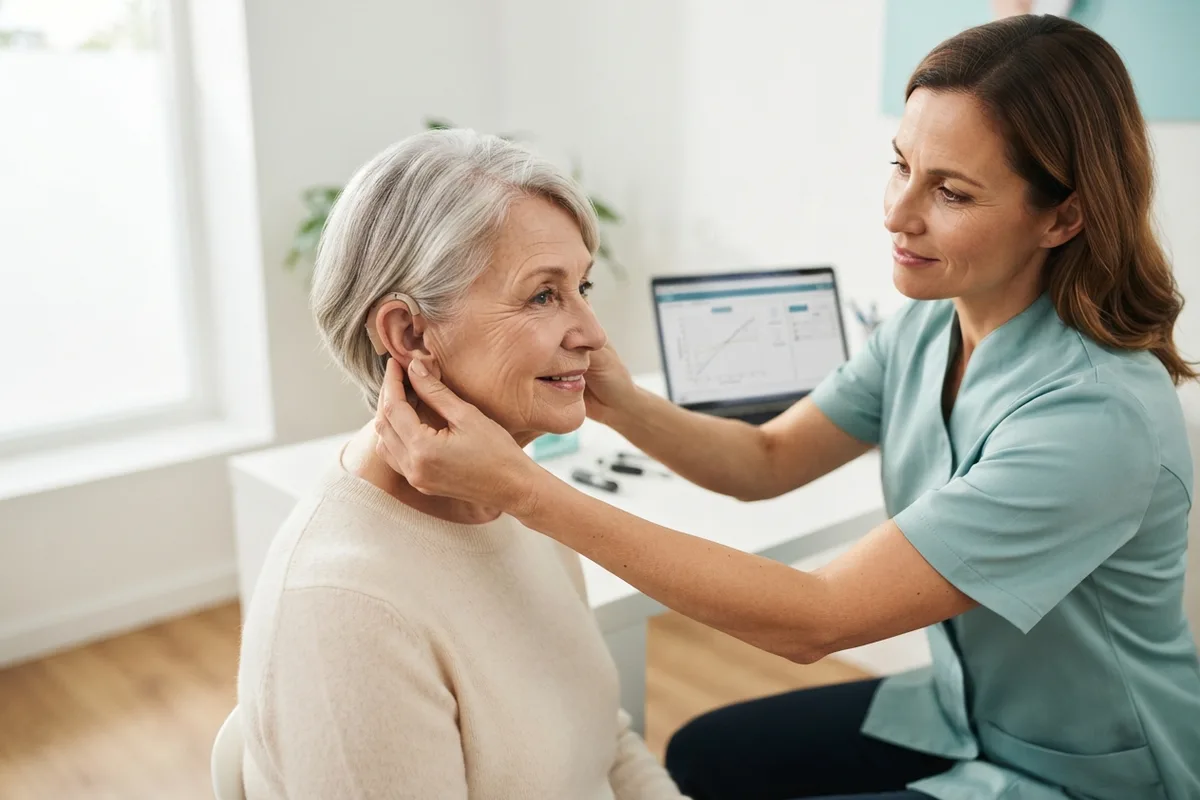
Who really needs a hearing aid — and when is it too soon?
Anyone whose hearing test shows loss that affects daily life is a candidate, and a hearing test is the only reliable way to know. Frequent requests to repeat, trouble following speech in noisy places, and a loud TV are signs to book one. Sudden hearing loss is a medical emergency and needs a doctor right away.
An audiogram is the only reliable way to answer that. A basic screening is quick and painless. If the test shows loss in the mild-to-moderate range and you are noticing symptoms in daily life, a hearing aid — prescription or over-the-counter — is a reasonable next step. If the loss is severe, OTC devices are not intended for you, and loss in only one ear also calls for a full professional workup rather than an OTC device.
Symptoms that push someone from "maybe" to "book the test":
- Asking family or friends to repeat themselves more than a few times per conversation.
- Struggling to follow speech in restaurants, meetings, or on speakerphone.
- Feeling drained after social gatherings — a strong sign the brain is straining to fill in missing sounds.
- Turning the TV up to a level others find loud.
- Persistent ringing or buzzing (see our tinnitus guide).
- Any sudden change in one or both ears — the NIDCD calls sudden hearing loss a medical emergency, so see a doctor immediately.
Waiting is not neutral. A 2013 study led by Johns Hopkins researchers in JAMA Internal Medicine, which followed nearly 2,000 older adults, found that those with hearing loss at the start had faster cognitive decline than those with normal hearing. The ACHIEVE trial published in The Lancet in 2023 suggests that a hearing intervention may slow cognitive decline in older adults at higher risk, though it has not been shown to prevent dementia. The takeaway is careful, not scary: treating hearing loss when it starts is not just about hearing the TV.
What can natural support really do — and what can't it do?
Natural support can help keep the inner ear healthy by supporting blood flow and nerve health and by correcting real nutrient deficiencies. It cannot regrow dead hair cells, amplify sound, or replace a hearing test or a hearing aid. Any product that promises to undo hearing loss or replace hearing aids is overselling.
Natural support is the umbrella term for the food, nutrients, and lifestyle habits that keep the inner ear as healthy as possible. It does real work. It is also frequently oversold. Here is the honest split.
What natural support actually does
- Feeds the cochlea's blood supply. The inner ear is highly vascular. Cardiovascular basics — managed blood pressure, controlled blood sugar, exercise, not smoking — are good for the small blood vessels that feed it.
- Corrects specific deficiencies that matter. Vitamin B12 is the best-studied nutrient for hearing, and others such as folate, magnesium, vitamin D, and omega-3 fatty acids are also being studied. Our full guide to vitamins and nutrients for ear health covers each one.
- Supports an overall healthy diet. A diet rich in leafy greens, colorful vegetables, whole grains, and fatty fish is good for heart and blood-vessel health, which the ear depends on.
- Supports nerve function. Your body needs vitamin B12 to keep nerve cells healthy, and the hearing pathway runs on nerves.
What natural support cannot do
- It cannot regrow dead hair cells. Humans do not have that biology.
- It cannot amplify sound. If your ear no longer converts a signal, no capsule adds it back.
- It cannot replace an audiogram. Guessing at your loss profile with a supplement is like guessing at your blood pressure with a mood.
- It cannot deliver the direct gain a fitted hearing aid gives someone with real loss. A hearing aid makes sounds louder as soon as it is switched on. Supplements, when they help at all, work slowly.
A rough sanity test: if a product's marketing says "reverse hearing loss," "restore hearing naturally," or "no more hearing aids," it is not being honest with you. Any responsible supplement — including ones we like — will describe itself as support, not a cure. That framing is the difference between a legitimate ear-health habit and a scam.
Can you use hearing aids and natural support together?
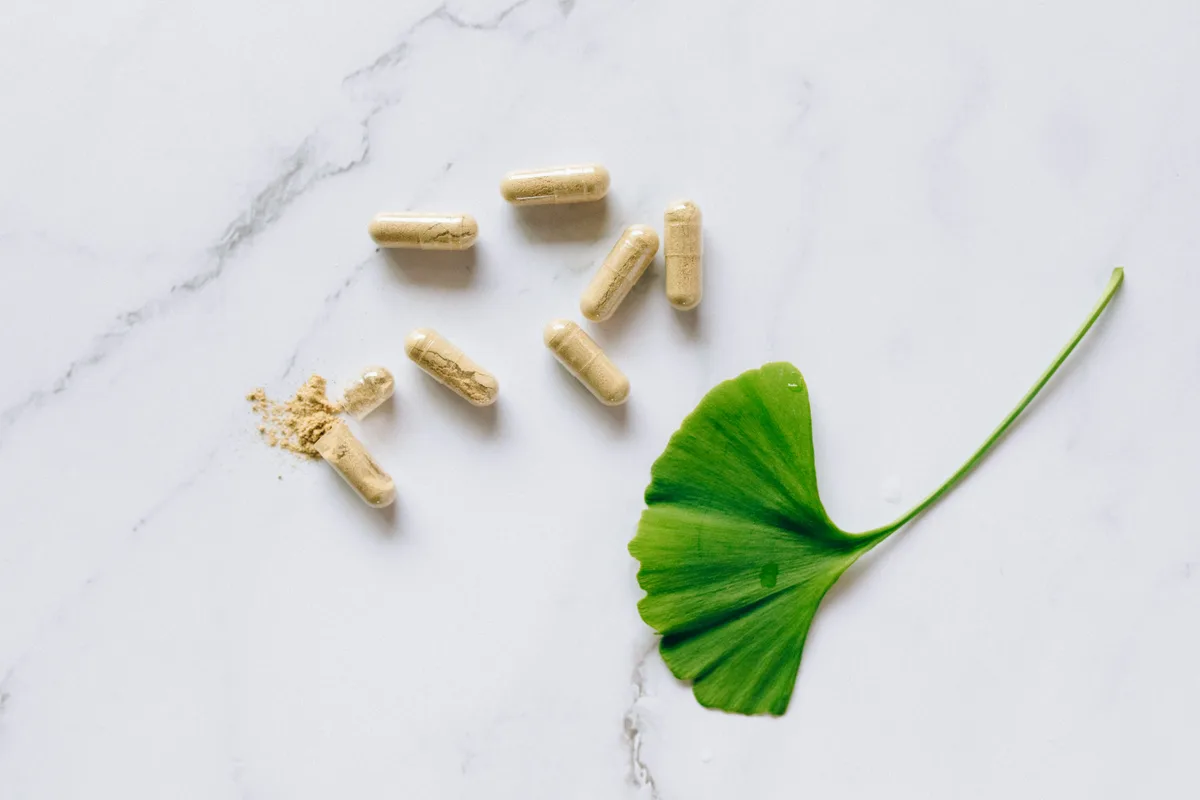
Yes. A hearing aid handles the amplification your ear can no longer do, while a healthy diet, managed blood pressure, and, where appropriate, supplements support the cardiovascular and nerve health around it. Tell your doctor about every supplement first, because some, such as ginkgo, can raise bleeding risk with blood thinners.
Yes — for people who already have measurable hearing loss, the two can work side by side. The aid handles what the ear can no longer do (amplification, frequency shaping, noise separation). Nutrition and, where relevant, supplements support the underlying cardiovascular and nerve health that keeps the ear working around the device.
A few honest guardrails worth stating out loud:
- Tell your doctor about every supplement. Some interact with blood thinners, blood-pressure medication, diabetes drugs, and thyroid medication. Ginkgo biloba, for example, may increase the risk of bleeding in people taking anticoagulants such as warfarin, according to the NIH's NCCIH.
- Do not stop wearing the hearing aid because the supplement "feels like it's working." A hearing aid's job is not something a supplement can pick up.
- Buy the supplement second, not first. Cover the basics — protection, blood pressure, diet, sleep, a real audiogram — before adding a bottle.
- Look for a money-back guarantee. A supplement that will not stand behind itself is not one worth trying.
How do hearing aids and natural support compare side by side?
Hearing aids are FDA-regulated devices that amplify sound, with strong trial evidence for improving quality of life. Natural support works slowly, cannot amplify sound, and has mixed evidence that is strongest for individual nutrients such as vitamin B12. Neither one reverses hearing loss, and the two can be combined.
Here is the short version of everything above — the honest, feature-by-feature comparison you can read in thirty seconds.
| Aspect | Hearing aids | Natural support (nutrients / diet / lifestyle) |
|---|---|---|
| What it does | Amplifies sound the inner ear no longer detects; shapes it by frequency so speech is clearer. | Supports blood flow, nerve health, and inner-ear tissue. Does not amplify anything. |
| Who it's for | Adults with a diagnosed mild-to-severe hearing loss confirmed by an audiogram. | Adults protecting healthy ears, or those layering habits on top of a real hearing plan. |
| Can it reverse damage? | No — it works around the damage by making sounds easier to hear while you wear it. | No — it helps care for the ear tissue you still have and can correct a real nutrient deficiency. |
| Time to benefit | Sound is louder as soon as it is switched on; getting used to it can take a few weeks. | Slow, if at all. Depends on baseline diet and any real deficiency. |
| Cost (US) | From hundreds to several thousand dollars, depending on type, style, and features (NIDCD). | Whole-food diet: often little or no extra cost. Supplements: varies by product. |
| Regulation | FDA-regulated medical device, prescription or over-the-counter. | Dietary supplement — the FDA does not approve supplements before they are sold. |
| Evidence strength | Strong — a 2017 Cochrane review of randomized trials found quality-of-life and listening gains. | Mixed — signals for individual nutrients such as B12 and fish intake; weaker for multi-ingredient blends. |
| Combine both? | Yes — supporting heart and nutritional health alongside a hearing aid makes sense; check any supplement with your doctor. | |
What does the research actually say about each?
The evidence for hearing aids is strong: a 2017 Cochrane review of randomized trials found they improve quality of life and listening ability in adults with mild-to-moderate loss. Evidence for natural support is mixed, with signals for vitamin B12 and fish intake, but multi-ingredient hearing supplements lack comparable randomized trials.
For hearing aids, the evidence is broad and consistent. A widely cited 2017 Cochrane systematic review (Ferguson et al.) analyzed five randomized trials with 825 participants in adults with mild-to-moderate hearing loss and concluded that hearing aids "are effective at improving hearing-specific health-related quality of life, general health-related quality of life and listening ability." More recently, the ACHIEVE trial, published in The Lancet in 2023, randomized 977 adults aged 70 to 84 with untreated hearing loss. Over three years, the hearing intervention did not change cognitive decline in the full group, but it slowed decline in a pre-specified subgroup at higher risk. It did not prove dementia prevention. That is careful language for good reason — but the direction of the science has been steady for a decade.
For natural support, the story is more granular. A 2025 systematic review in the Ear, Nose & Throat Journal (Rodrigues, Anand, Ravi et al.) analyzed the vitamin B12 evidence and found statistically significant differences in hearing thresholds at lower B12 levels — especially in older adults. The Blue Mountains Hearing Study, an observational study of 2,956 Australian adults aged 50 and older, found that those who ate two or more servings of fish a week had a 42% lower risk of developing age-related hearing loss at follow-up than those who ate less than one serving a week. Individual nutrients have strong signals. Multi-ingredient "hearing supplements" as products, however, are not backed by randomized controlled trials the way hearing aids are — because supplement manufacturers rarely fund that kind of research. That does not make them useless, but it means honesty is required in how they are described.
Put together: the science says "wear the aid you need, feed the ear you have." That is not a compromise. It is the actual recommendation.
How do I choose the right path for me?
Start with a hearing test, because the result decides the path: if it shows real loss, a hearing aid is the primary answer. Then cover the basics, such as blood pressure, blood sugar, ear protection, and asking your doctor about B12 and vitamin D levels. Consider a supplement only after those steps, as an extra.
A practical five-step decision path:
- Get an audiogram first. You cannot compare hearing aids and natural support without knowing what your ears are actually doing. Screenings are quick, and the American Speech-Language-Hearing Association recommends hearing screening every three years after age 50.
- If the audiogram shows real loss, a device is the primary answer. Prescription for moderate-to-severe or single-sided loss. OTC can be a reasonable first step for adults with perceived mild-to-moderate loss.
- Address the underlying health basics. Blood pressure, blood sugar, exercise, sleep, and — if you are still exposed to loud environments — proper ear protection. See our noise-induced hearing loss guide for the specific decibel thresholds and protection strategies.
- Ask your doctor about checking B12 and vitamin D. If a blood test shows a real deficiency, correcting it is one of the most worthwhile natural steps you can take.
- Only after all four above — consider a natural supplement. Look for transparent ingredient lists, honest claims, and a real money-back window. Anything that promises to replace a hearing aid or "restore hearing" is a red flag.
The order matters. Buying a supplement first and skipping the hearing test is a common mistake. It does not save money — it just delays the step that would actually change day-to-day life.
Audifort: a side habit, never a stand-in for a hearing aid
A hearing aid amplifies sound; a supplement does not. If you have a diagnosed loss, the device and your audiologist's plan come first. Some readers still like to add a nutritional habit alongside. Audifort is a liquid supplement that its maker describes as plant extracts plus B-complex nutrients meant to support inner-ear circulation. It will not amplify sound or undo hearing loss. Results vary, and it comes with a 90-day money-back guarantee.
Read our full Audifort review → Our review page contains affiliate links. If you buy through them, Better Hearing Daily may earn a small commission at no extra cost to you. This does not change our editorial view.Frequently asked questions
Can natural supplements replace hearing aids?
How do I know if I actually need a hearing aid?
Are natural hearing supplements a scam?
Can you use hearing aids and supplements together?
How much do hearing aids cost in the United States?
What does the research say about hearing aids improving quality of life?
Test, treat, protect, in that order
Get tested, wear a hearing aid if you need one, and protect your ears from loud places. Supplements come after all of that, if at all. For readers who want to read about one, our Audifort review covers the ingredients and the maker's claims in detail. It is not a treatment for hearing loss and does not replace a hearing aid.
Read our full Audifort review → Our review page contains affiliate links. If you buy through them, Better Hearing Daily may earn a small commission at no extra cost to you. This does not change our editorial view.