Noise-Induced Hearing Loss: How Loud Sounds Damage Your Ears
 By Emily Carter
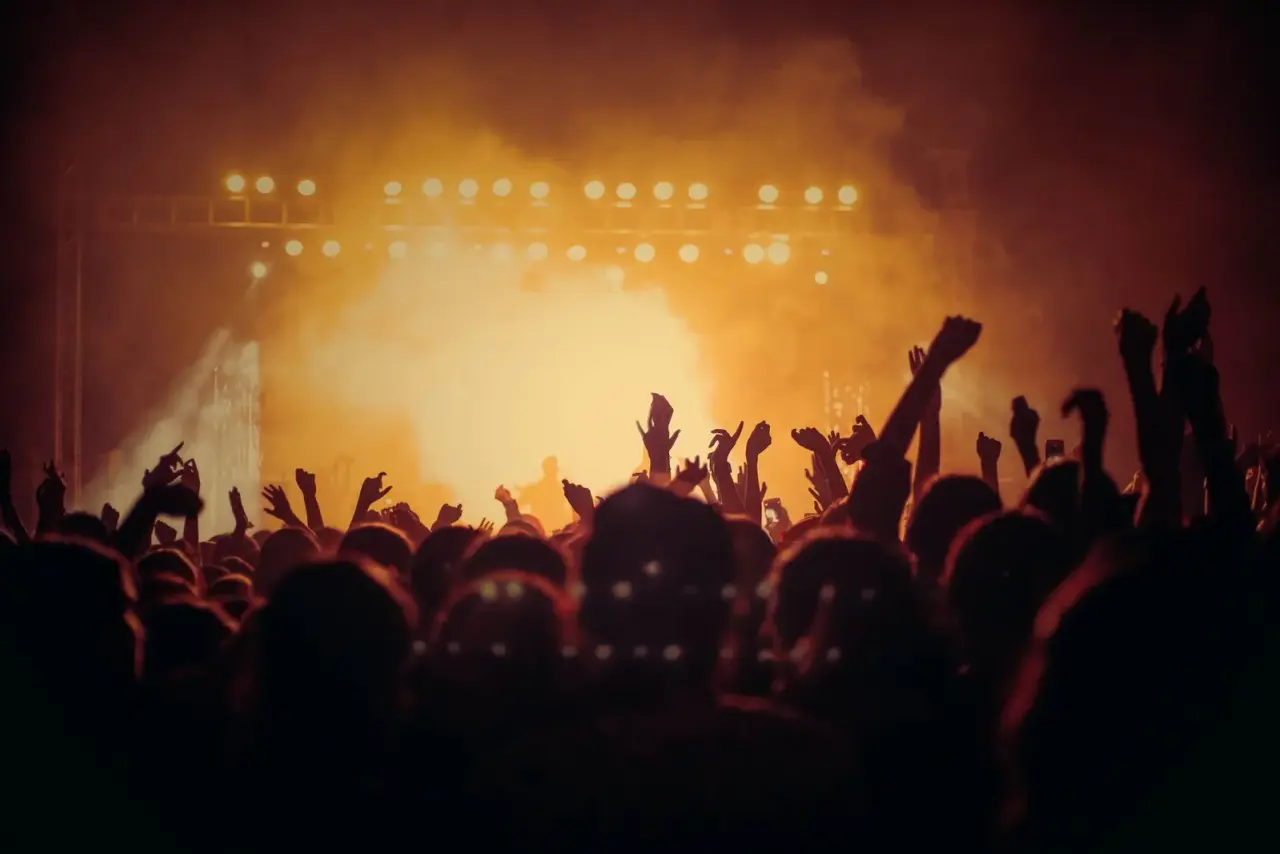
A single unprotected night in front of concert speakers can produce hours of temporary hearing changes — and some damage can remain even after hearing seems to bounce back.
Noise-induced hearing loss happens when loud sound damages the tiny sensory hair cells inside your inner ear. Sounds above 85 decibels, such as power tools, motorcycles, concerts and loud headphones, can injure hearing after long exposure, and very loud impulses like fireworks or gunshots can hurt in a single moment. The damage is permanent, but almost entirely preventable.
You know that muffled, cotton-wool feeling in your ears after a loud concert, a long shift on a jackhammer, or a two-hour road trip with the windows down? That is your inner ear waving a small white flag. It usually recovers overnight — but not always, and not completely.
Noise-induced hearing loss is one of the most common and most preventable kinds of hearing damage in the world. Unlike age-related hearing loss, which sneaks in over decades, noise damage often has a clear cause. And unlike a lot of health problems, this one is almost entirely under your control. This guide walks through exactly how loud is too loud, how long you can safely stay there, what the early warnings look like, and how to protect the ears you have.
What is noise-induced hearing loss?
Noise-induced hearing loss is permanent hearing damage caused by sound that is too loud, lasts too long, or both. Loud noise injures the tiny hair cells in the inner ear that turn vibrations into signals for the brain, and in humans those cells do not grow back. It can happen in one blast or build up over years.
Noise-induced hearing loss (NIHL) is damage to hearing caused specifically by exposure to sound that is too loud, for too long, or both. It happens inside the cochlea, a snail-shaped structure in the inner ear lined with thousands of microscopic sensory cells called hair cells. Those cells convert vibrations in the air into electrical signals your brain reads as sound.
Loud noise physically batters those hair cells. Some recover. Some do not. As the National Institute on Deafness and Other Communication Disorders (NIDCD) puts it, unlike bird and amphibian hair cells, human hair cells don't grow back — which is why noise damage is permanent even when the "muffled" feeling goes away. The NIDCD estimates that at least 10 million U.S. adults under 70 (6%), and perhaps as many as 40 million (24%), have hearing loss from loud noise exposure, and that as many as 17% of teens aged 12 to 19 show hearing test features suggesting noise damage.
NIHL comes in two flavors. Acute damage happens in a single loud moment — a gunshot at close range, an explosion, an airbag deploying near your face, a fireworks show without protection. Chronic damage builds slowly from hours, months, or years of unsafe volume levels: factory work, live music, motorcycles, chainsaws, and — very often now — headphones and earbuds cranked up loud enough to drown out a subway.
How loud is "too loud" for your ears?
Sound at or above 85 decibels can damage hearing with long or repeated exposure, according to NIOSH and the NIDCD. Above that level, the safe listening time drops fast: NIOSH halves the recommended daily time with every 3-decibel increase, so 100 dB is safe for only about 15 minutes a day.
The short answer: 85 decibels (dB) with prolonged exposure. That is the threshold NIOSH (part of the CDC) uses for hazardous workplace noise — its recommended limit is 85 dBA averaged over an eight-hour workday — and it is the number to remember. Above 85 dB, the risk of permanent hearing damage rises, and the safe exposure time drops steeply.
Decibels are not linear, which is what trips most people up. Under NIOSH's 3-decibel exchange rate, every 3 dB increase cuts the recommended exposure time in half. So the difference between 85 dB and 100 dB is enormous — five halvings, or 32 times less safe time — not just "a bit louder."
Here is a rough sense of where common sounds sit, using figures from the CDC's "Listen Up! Protect Your Hearing" guide:
- 30–40 dB — whispering, a refrigerator (safe)
- 45–65 dB — a dishwasher (safe)
- 65–80 dB — normal conversation (safe)
- 80–100 dB — a lawn mower (hearing loss possible with regular use)
- 80–110 dB — motorcycles (some hearing loss possible after about an hour)
- 94–110 dB — sports events (risky in less than half an hour)
- 96–110 dB — headphones at highest volume (risky in just a few minutes)
- 95–115 dB — rock concerts and nightclubs (risky after a few minutes)
- 110–129 dB — sirens (risky in less than a minute)
- 140–160 dB — fireworks (immediate risk of permanent damage)
A useful gut-check when you have no meter: the NIDCD lists having to speak loudly or shout so people an arm's length away can hear you as a sign the noise may be damaging. Phone decibel meter apps are not calibrated like lab equipment, but they can help you spot when a room is louder than you thought.
How long does it take for noise to damage hearing?
It depends on how loud the sound is. An extremely loud blast, like a gunshot or a firework at close range, can cause permanent damage instantly. Everyday noise above 85 decibels usually works slowly, over months or years of repeated exposure, and the temporary muffling after a loud event often fades within 16 to 48 hours.
This is where the difference between acute and chronic exposure matters. Both are dangerous. They just look different.
Acute noise damage — the single loud event
A single impulse of extremely loud sound — a firework at close range, a gunshot without ear protection, an industrial explosion, an airbag — can cause immediate, permanent hearing loss, and the NIDCD notes it can also rupture the eardrum or damage the bones of the middle ear. Symptoms often include a sharp pain in the ear, sudden hearing loss, and a loud, unrelenting ringing (severe tinnitus). Any of those after a loud event is urgent: the NIDCD advises treating sudden hearing loss as a medical emergency, because timely treatment greatly increases the chance of recovering at least some hearing.
A single unprotected rock concert usually does not cause the same category of damage, but it can produce a temporary hearing loss — the muffled, ringing-ears feeling — that the NIDCD says can disappear 16 to 48 hours later. The catch: research cited by the NIDCD suggests that long-term damage may remain even after hearing seems to recover — which is why repeated "it went away by morning" episodes are worth avoiding.
Chronic noise damage — the everyday version
Chronic NIHL is by far more common and much sneakier. It comes from sitting at 90 dB for a few hours a day at work. Or from a decade of headphones on the commute. Or from mowing the lawn every weekend without earplugs. Each session is not enough to obviously injure hearing — but the damage stacks. High-frequency hearing usually goes first, which is why people with early NIHL often say "I hear fine, but I can't make out what my kids are saying in a noisy room."
Occupational rules exist precisely because of this pattern. The U.S. Occupational Safety and Health Administration sets a legal permissible exposure limit of 90 dB over an 8-hour shift, with mandatory hearing conservation programs kicking in at 85 dB. The rules exist for a reason — but they only protect people at work. Nothing regulates your headphones on the train.
What are the warning signs your ears are being damaged?
The earliest warning signs are usually temporary: ringing or buzzing that lingers after the noise stops, muffled or "underwater" hearing, and trouble following speech in a noisy room. They often fade by the next day, which makes them easy to ignore, but if they keep coming back, your ears need less noise and a hearing test.
The earliest signs of noise damage are almost always temporary. That is what makes them easy to ignore. But they are the ears' equivalent of a car dashboard light. Notice them regularly and something needs to change.
- Ringing, buzzing, or hissing in one or both ears that outlasts the noisy environment. Even a few minutes of tinnitus after a loud event is a message. If it becomes chronic, our companion piece on tinnitus causes and what actually helps is worth reading.
- Muffled or "underwater" hearing for hours after a concert, a shift, or a long headphone session.
- Difficulty following speech in background noise — the classic "everyone mumbles at restaurants" complaint.
- A stuffed or full feeling in the ear that comes and goes.
- Sensitivity to certain frequencies — some sounds suddenly feel piercing while others feel dulled.
- Trouble hearing higher voices (children, some women) while lower voices sound fine.
If two or more of those are showing up after normal weekly activities, do not shrug them off. Book a hearing test. The screening is quick, painless, and the results give you a real baseline to compare against later. Our guide to the warning signs of hearing loss lists the other early clues to watch for.
Which everyday sounds put your ears most at risk?
Headphones at high volume, concerts and nightclubs, lawn mowers and power tools, motorcycles, and impulse sounds like fireworks or gunshots carry the most everyday risk. CDC figures put headphones at their highest volume at 96 to 110 decibels and rock concerts at 95 to 115, well above the 85-decibel level where damage can begin.
Most people think of NIHL as a factory or battlefield problem. In everyday life, though, much of the risk comes from a short, very ordinary list.
Personal audio devices
The NIDCD notes that headphones can reach 110 dBA at maximum volume — as loud as many concerts. The World Health Organization estimates that nearly 50% of people aged 12 to 35 — about 1.1 billion young people — are at risk of hearing loss from prolonged, excessive exposure to loud sound, including music through personal audio devices. The mistake most listeners make is turning the volume up to drown out background noise on a subway or a plane — a habit that turns a moderate volume into a dangerous one.
Live music and clubs
The CDC puts rock concerts and nightclubs at 95 to 115 dB, loud enough to cause some hearing loss after just a few minutes — and the closer you stand to the speakers, the louder it gets. A pair of high-fidelity musician earplugs (which lower the volume without muddying the sound) solves this without ruining the night.
Power tools and yard work
The CDC lists lawn mowers at 80 to 100 dB, and its hearing-loss guidance names power tools among the everyday noise sources that can damage hearing — think chainsaws, leaf blowers, and impact drills. A long session of yard work with no protection is a real dose.
Motorcycles and open-window driving
For a helmeted motorcyclist, measurements published in the British Journal of Audiology (Binnington et al., 1993) found that wind noise became the dominant sound above about 40 mph and rose from about 90 dB(A) to 112 dB(A) at 100 mph. Cars are quieter, but not silent: in a study of convertibles driven at about 55 to 75 mph with the top down, average noise ranged from 85.3 to 89.9 dB (Mikulec et al., Journal of Laryngology & Otology, 2011).
Impulse sounds — fireworks, guns, alarms
Peak intensity matters more than average volume here. The CDC puts fireworks at 140 to 160 dB, and the NIDCD warns that a single extremely loud burst, such as a gunshot, can cause immediate, permanent hearing loss.
Home appliances (yes, really)
Blenders, hair dryers, and vacuum cleaners are loud in short bursts. Individually, they are usually fine. But if you have to raise your voice to talk over one, it is worth noticing how often — and for how long — it runs in your day.

How can you actually protect your hearing?
Turn the sound down, move away from it, or block it. Wearing earplugs or earmuffs in loud places, keeping headphone volume moderate, stepping back from speakers, and giving your ears quiet breaks are the core habits. According to the NIDCD, noise-induced hearing loss is the only type of hearing loss that is completely preventable.
Prevention is not glamorous, but it is the only part of this story you fully control. The NIDCD calls noise-induced hearing loss the only type of hearing loss that is completely preventable. A short list of habits — done consistently — makes an enormous difference.
Use hearing protection when it is loud
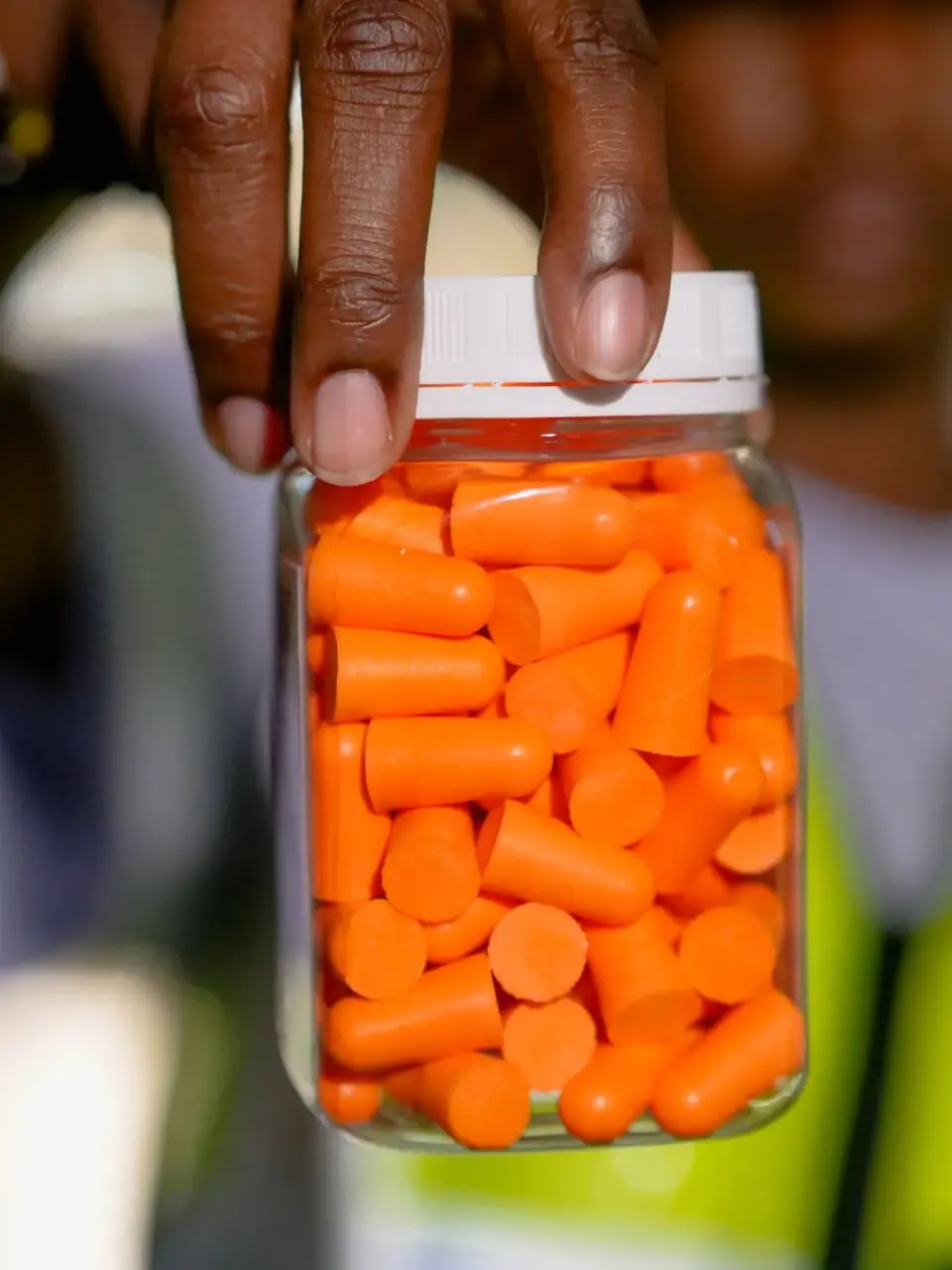
Foam earplugs are cheap, discreet, and effective when they fit. Roll them into a thin tube without creasing the foam, then insert them deep into the ear canal. NIOSH notes that almost any hearing protector, when fit correctly, can reduce noise by 10 dB, and it recommends double protection — earmuffs over earplugs — at 100 dBA and above or around impulse sounds such as gunfire. Musician-grade earplugs preserve sound quality for concerts. There is no scenario where you need to choose between "enjoying the sound" and "protecting your ears."
Follow the 60/60 rule for headphones
A popular rule of thumb: no more than 60% of maximum volume, for no more than 60 minutes at a time, and then a break. Noise-cancelling or well-sealed over-ear headphones help enormously because you do not have to raise the volume to compete with the environment.
Give your ears silence
After any loud environment, give your ears some genuine quiet — no headphones, no TV turned up to compensate. If ringing continues into the next day, that is a sign the day was too loud.
Keep a distance from the speaker
As the NIDCD puts it, the closer you are to the source of a sound, the louder it will be. Standing well back from the stage instead of right next to the speakers is one of the easiest wins at a concert.
Get a baseline hearing test
Even a single audiogram in your 30s or 40s gives you something to compare against in ten years. The test is quick and painless. The American Speech-Language-Hearing Association recommends screening adults at least every 10 years through age 50 and every three years after that — sooner if you work around noise.
Support your inner-ear health from the inside
The cochlea depends on steady blood flow, healthy nerve function, and low oxidative stress. That means the boring cardiovascular basics matter: managing blood pressure, keeping blood sugar steady, exercising, not smoking, and eating a diet with plenty of leafy greens, colorful vegetables, and fatty fish. Nutrition research here is still small. In a 1993 study of 113 noise-exposed army personnel published in the American Journal of Otolaryngology (Shemesh et al.), vitamin B12 deficiency showed up in 47% of those with chronic tinnitus plus noise-induced hearing loss, compared with 27% of those with noise-induced hearing loss alone and 19% of those with normal hearing. That shows an association, not proof that B12 prevents noise damage. Our guide to the vitamins and nutrients studied for ear health walks through what the evidence does and does not show.
Audifort: a daily drop supplement, not an earplug alternative
Some readers who already protect their ears at concerts and at work ask whether a nutritional supplement could add anything. Audifort is a liquid supplement that its maker describes as a blend of plant extracts and B-complex nutrients meant to support inner-ear circulation. It will not undo noise damage, and no drop can stand in for earplugs, volume limits, or an audiologist's checkup. Results vary from person to person, and the maker backs it with a 90-day money-back guarantee.
Read our full Audifort review → Our review page contains affiliate links. If you buy through them, Better Hearing Daily may earn a small commission at no extra cost to you. This does not change our editorial view.What if you think you've already damaged your hearing?
Act on the specific clue you have. Sudden hearing loss is a medical emergency, so see a doctor right away, because treatment that starts late is less likely to help. Ringing or muffled hearing that lasts more than two days after a loud event, or hearing that has slipped over years, calls for a hearing test.
First, take a breath. Even people with meaningful NIHL live full, sound-rich lives — especially when they take steps now instead of ten years from now. Second, act on the specific clues you are getting.
If your hearing changed suddenly
Sudden hearing loss in one or both ears is a medical emergency, and the NIDCD advises seeing a doctor immediately. Corticosteroids are the most common treatment, and the NIDCD notes that treatment delayed for more than two to four weeks is less likely to reduce permanent hearing loss — so do not wait to see whether it clears on its own.
If ringing or muffled hearing stuck around after a loud event
Give your ears a genuine quiet break for a day or two — no headphones, no loud environments. If the symptoms persist beyond 48 hours, book a hearing test. Persistent tinnitus after noise exposure is one of the clearest signs of cochlear stress and is worth taking seriously.
If your hearing has been slowly slipping for years
Get an audiogram. Knowing exactly which frequencies have shifted (and how much) changes everything about your plan: whether over-the-counter or prescription hearing aids might help, whether specific frequencies of tinnitus can be masked, whether workplace exposure needs to change.
Above all, stop adding to the pile. The single most valuable thing you can do the day after suspecting noise damage is to start protecting the hearing you still have. Every hair cell you save is one you keep.
How can you live well with noise-induced hearing loss?
By cutting background noise and protecting the hearing you still have. Facing the person who is talking, choosing quieter seats, turning on captions, and keeping earplugs within reach make conversations easier and help keep further damage from piling up. Telling family and friends about your hearing also lets them help you.
Some of the biggest quality-of-life improvements come from small, boring changes:
- Face the person you are talking to. Lip-reading fills in more than most people realize.
- Choose quieter seats. A booth away from the kitchen. A window seat away from the aisle. Background noise is the main enemy for damaged ears.
- Use captions. On TVs, phones, and video calls. Reducing the mental load of "filling in" cuts fatigue enormously.
- Cover your ears reflexively. Ambulance passing? Fingers in. It looks silly. It works.
- Keep good foam plugs everywhere. Glove box, backpack, kitchen drawer. If they are there, you use them.
- Rest after loud days. A quiet evening after a noisy day gives your ears a break.
- Tell the people around you. The people who love you cannot help if they do not know.
Noise-induced hearing loss is not a moral failing or a sign you did anything wrong. It is a physical consequence of a sound-saturated world — and the good news is that almost every future exposure is one you have the power to change.
Frequently asked questions
At what decibel level does noise start to damage hearing?
Can noise-induced hearing loss be reversed?
Are headphones and earbuds bad for your hearing?
What is the difference between noise-induced hearing loss and age-related hearing loss?
What are the first signs of noise damage to your ears?
Do foam earplugs really work?
Protection first, everything else second
Earplugs at loud events, headphones kept at a moderate volume, regular quiet breaks, and a baseline audiogram do the heavy lifting. Only once those are in place is a supplement worth a look. We wrote up the ingredients, the maker's claims, and the fine print in our Audifort review. It is not a treatment for hearing loss, and it supports the basics rather than replacing them.
Read our full Audifort review → Our review page contains affiliate links. If you buy through them, Better Hearing Daily may earn a small commission at no extra cost to you. This does not change our editorial view.