7 Warning Signs Your Hearing Is Getting Worse
 By Emily Carter

One of the earliest warning signs of hearing loss is not silence — it is the volume slowly creeping up, and no one saying a word about it.
The most common warning signs your hearing is getting worse are asking people to repeat themselves, turning up the TV, hearing voices but not the words, tiredness after group talk, avoiding noisy restaurants, ringing in the ears and trouble with phone calls. Two or more of these, showing up regularly, is a reason to book a hearing test.
Hearing loss almost never announces itself. There is no dramatic morning where the world goes quiet. Instead, there are seven or eight small things that shift over months and years — the TV creeping up two notches, the way restaurants suddenly feel exhausting, the phone that only sounds clear when held to one ear. Most people notice one or two and shrug them off. A partner or an adult child usually spots the pattern first.
This guide walks through the 7 warning signs your hearing is getting worse that often show up long before someone finally books a test. Each one is checked against the symptom and screening lists published by the U.S. National Institute on Deafness and Other Communication Disorders (NIDCD), the American Speech-Language-Hearing Association (ASHA), and MedlinePlus. If two or more sound familiar, the good news is that acting now is much easier than waiting years.
Why do so many people wait years before checking their hearing?
Mostly because hearing loss is gradual and the brain quietly compensates for it. In a long-running U.S. study of older adults, people waited an average of 8.9 years between qualifying for hearing aids and actually getting them. Leaning in, lip-reading, and skipping noisy places can hide the change for a long time.
Because hearing loss is slow. Painfully slow. Age-related hearing loss (presbycusis) usually creeps in gradually over years, one small notch at a time, and the brain is astonishingly good at compensating — leaning in, lip-reading, filling in the missing consonants, avoiding rooms that feel harder. By the time someone realizes they cannot understand their grandchild on the phone, they have often been quietly adjusting for years.
The delay is real and measurable. A Medical University of South Carolina study that followed adults for years found an average gap of 8.9 years between the point people's hearing tests showed they qualified for hearing aids and the day they actually got them.[1] And waiting is not entirely neutral. The 2020 Lancet Commission on dementia named hearing loss the largest potentially modifiable midlife risk factor for dementia it studied, and its 2024 update ranked hearing loss, alongside high LDL cholesterol, at the top of its list.[2] That does not mean hearing loss causes dementia in any one person, but it is one more reason not to put off a hearing test.
None of the signs below mean you definitely have hearing loss on their own. Wax, a lingering cold, an ear infection, or medication side effects can mimic several of them. But when two or three show up together, week after week, they are your ears asking to be listened to.
What are the 7 warning signs your hearing is getting worse?
The seven most common signs are asking people to repeat themselves, turning up the TV, hearing voices but not words, feeling drained in noisy places, avoiding social events, ringing that will not quit, and harder phone calls. One sign alone proves little, but two or more showing up regularly is a good reason to book a hearing test.
Read the list slowly. Think about the last two weeks of your life, not a perfect day. If your first reaction to a sign is "well, everyone does that," that is often the sign itself talking.
1. You keep asking people to repeat themselves
"What?" "Sorry, say that again?" "One more time?" If you hear those coming out of your mouth several times a day — especially with the same people, in the same rooms — it is one of the clearest early markers. The American Speech-Language-Hearing Association lists consistent requests for repetition among the signs of hearing loss in adults. It is a telling one: the person's voice reached your ear, but not with enough detail for your brain to decode it.[4]
It shows up hardest with soft voices (children, some women), fast talkers, people with accents, and anyone speaking without looking at you. If you are turning your head to catch conversations, angling one ear toward the speaker, or covering with a smile when you did not actually catch what someone said, count that as the same sign.
2. The TV or radio keeps creeping louder (and someone else noticed first)
This one has a specific tell: somebody else mentions it before you do. A spouse asks if it can go down. An adult child cringes when they visit. A neighbor comments through the wall. Meanwhile the volume feels perfectly normal to you.
The very first question on the NIDCD's hearing self-screening list is "Does a hearing problem cause you difficulty when listening to TV or radio?" — and having to raise the TV volume is also on the MedlinePlus list of age-related hearing loss symptoms.[3], [5] TV dialogue competes with music and sound effects, and the soft consonants of speech are among the first things to blur when hearing slips. So the volume goes up not because the whole world is quiet, but because dialogue is muddier than it used to be.
A useful check: ask a family member what number the TV usually sits on, and whether it has crept up over the past year or two. If it has, and nothing about the TV changed, take note.
3. People sound like they are mumbling — you hear them, you just can't make out the words
This is the one that fools almost everyone. The volume is fine. Voices come through. But somewhere between "the sound reached my ear" and "my brain assembled a sentence" the words fall apart. MedlinePlus lists "problems telling apart certain sounds, such as 's' or 'th'" and more difficulty understanding higher-pitched voices among the symptoms of age-related hearing loss.[5] Those soft, high-pitched consonants are what help you tell one word from another. Louder vowel sounds still come through, so voices feel present and normal even when the words do not land.
The result is the familiar "everyone mumbles" complaint, and ASHA lists hearing other people's speech as "mumbled" among the signs of hearing loss in adults.[4] You are convinced the whole world has stopped speaking clearly, when in fact your ears are handing your brain an incomplete signal. If you find yourself watching lips almost by reflex, or if captions on the TV suddenly feel essential, you are probably doing this every day.

4. Restaurants, cafés, and group conversations exhaust you
"I can't do restaurants anymore" is one of the most familiar complaints of all. Problems hearing in noisy areas appear on the MedlinePlus symptom list for age-related hearing loss, and ASHA lists difficulty understanding speech in noise as a sign too.[5], [4] Background noise is the specific enemy of aging ears. When your hearing works well, your brain filters out clatter and locks onto the voice across the table without effort. When it does not, your brain performs an incredibly demanding act of noise-cancellation on the fly — and it gets tired.
That tiredness has a name in the research literature: listening-related fatigue, which hearing researchers have described in detail in the journal Ear and Hearing.[6] It looks like coming home from a family dinner with a headache, going quiet partway through a birthday party, or hating open-plan offices for reasons you cannot quite articulate. If everyone else at the table seems fine and you feel like you ran a mental marathon, your ears likely put the rest of your brain on overtime.
A partner asking "why did you stop talking halfway through dinner?" is often not a mood question — it is a hearing question.
5. You have quietly started avoiding places you used to enjoy
This is the sign nobody talks about, and it might be the most important. Because listening in hard environments is exhausting, people with slipping hearing start declining invitations. The busy restaurant becomes "we'll skip this one." The community meeting gets scheduled around. The big family holiday gets shorter every year.
The NIDCD's own screener flags this pattern with questions such as "Does a hearing problem cause you to feel left out when you are with a group of people?" and "Does a hearing problem cause you to avoid groups of people?"[3] Social withdrawal in older adults is not always a mood problem — sometimes it is a hearing problem in a mood-shaped disguise. And social isolation is itself on the Lancet Commission's list of modifiable dementia risk factors, right next to hearing loss.[2]
Look at your calendar. If the places you used to say yes to have quietly become "maybe next time," and if the reason is not really the food or the drive, ask honestly whether you were dreading straining to hear.
6. There is a ringing, buzzing, or hissing in your ears that will not quit
Tinnitus — the perception of sound with no external source — is closely tied to hearing loss. According to the NIDCD, most people who have tinnitus have some degree of hearing loss, and the phantom sound is generated by the brain, in the auditory cortex, rather than by the ear itself.[7] The ringing is not usually dangerous on its own, but it is often a sign that something in the hearing system has changed.
A ring after a loud concert can come with a temporary dip in hearing that, according to the NIDCD, usually disappears 16 to 48 hours later — though repeated episodes can still leave lasting damage.[8] What matters is ringing that is persistent — you notice it in a quiet bedroom, in the morning, at your desk — or ringing that has slowly become louder over months. That is a signal from the inner ear worth paying attention to. Our full companion guide on tinnitus causes and what actually helps unpacks the different kinds and what tends to work.
Ringing that starts suddenly together with hearing loss, a feeling of fullness in the ear, or dizziness is a different category. Those can be signs of sudden deafness, which the NIDCD says should be treated as a medical emergency — see a doctor right away, not in a few weeks.[9]
7. Phone calls have gotten harder — especially in one ear
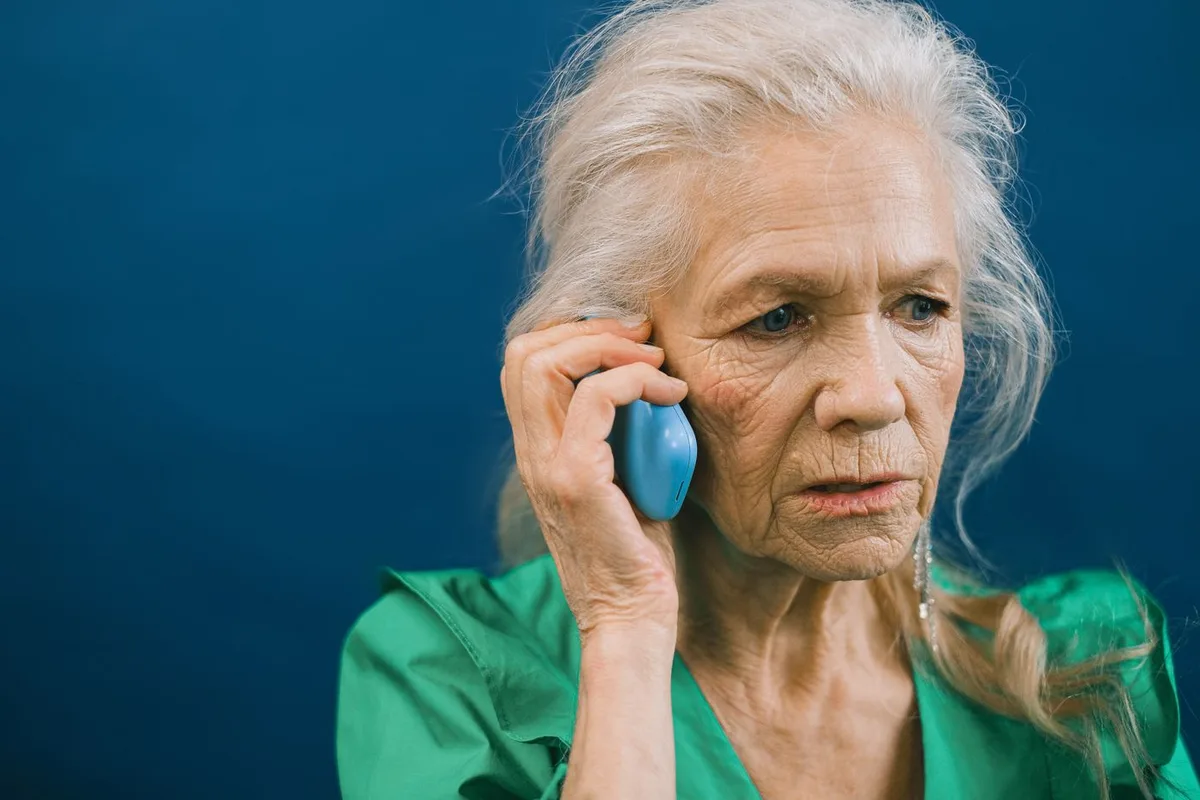
Phones are unforgiving. There are no lips to read, no body language, and call audio is rarely as crisp as a voice in the same room. ASHA lists difficulty understanding speech on the telephone among the signs of hearing loss in adults.[4] So the phone is often the place people first admit — even to themselves — that something has changed.
Two specific patterns matter. First, dreading calls in general: cutting them short, preferring texts, letting more of them go to voicemail. Second — and this one is important — noticing that one ear works clearly and the other feels muffled or "far away." Asymmetric hearing loss (one ear meaningfully worse than the other) is a pattern audiologists take seriously, because unlike gradual age-related loss on both sides, it can point to an old noise injury, an ear infection, wax buildup, or occasionally something that deserves prompt medical attention.
How can you check your hearing at home before an appointment?
You can screen yourself at home, but you cannot diagnose yourself. The NIDCD's ten self-screening questions, a simple two-week log, and honest feedback from the people closest to you can show whether a pattern exists. Only a professional hearing test, called an audiogram, measures how much your hearing has actually changed.
A real audiogram is the gold standard, and nothing at home replaces one. But a few honest self-checks can tell you whether it is time to book that appointment or keep watching.
Answer the NIDCD's ten screening questions
The NIDCD publishes a free set of ten self-screening questions, adapted from a validated hearing-handicap questionnaire. They ask whether a hearing problem makes things like TV, parties, family conversations, or group settings harder. If you answer "yes" to two or more, or "sometimes" to three or more, the NIDCD suggests you could have hearing loss and should consider having your hearing checked.[3] The questions cannot diagnose anything, but they are a useful, honest starting point.
Track it over two weeks
Keep a very short daily note for fourteen days: did you ask someone to repeat themselves today (yes/no), did the TV or the phone feel harder (yes/no), was there ringing (yes/no). At the end, look at the pattern. If the same answers keep coming up "yes," that is worth bringing to a hearing test — and the notes themselves will help the person testing you.
Ask the two people who see you the most
A spouse, an adult child, a close friend. Ask them directly — not "do you think I hear okay," which invites politeness, but "have you noticed the TV going up," or "am I asking you to repeat yourself more." The people around you often notice the change before you do.
When should you actually see an audiologist?
Right away if your hearing drops suddenly, because the NIDCD calls sudden deafness a medical emergency. Otherwise, book a hearing test within a few weeks if two or more warning signs show up regularly. ASHA also recommends hearing screening every three years after age 50, even when you notice no symptoms at all.
The American Speech-Language-Hearing Association recommends that adults be screened at least every 10 years through age 50 and every three years after that — sooner with noise exposure or other risk factors.[10] If any of the signs on this list are showing up regularly, the recommendation is simpler: now, not later.
Get medical care right away (the same day if you can) if:
- Your hearing dropped suddenly in one or both ears. The NIDCD says to treat sudden deafness as a medical emergency and see a doctor immediately, because treatment that is delayed for more than two to four weeks is less likely to help.[9] Go to urgent care or an emergency room if you cannot be seen quickly.
- Ringing or fullness in one ear came on suddenly, especially together with hearing loss or dizziness
Book a hearing test soon if:
- One ear now feels meaningfully worse than the other on phone calls
- You spent years in loud environments (military, construction, live music, factory floors) and any of the signs above are present — noise damage builds up quietly over time
- Two or more of the seven signs are showing up regularly
- Family members have mentioned the TV volume more than once
- You catch yourself declining social events because they feel like work
- You are over 50 and have never had a baseline audiogram
A hearing test is short and painless, and basic screenings are often available at low or no cost. A full audiogram shows how well each ear hears at different pitches, which is more useful than any guess you could make from the signs above alone. It also gives you a baseline to compare against in future years, which is arguably its most valuable output.
What can you do while you wait for the appointment?
Protect the hearing you still have. Lower your daily noise exposure, keep headphone volume moderate, carry earplugs, and look after your blood pressure. None of this reverses existing damage, because human inner-ear hair cells do not grow back, but limiting loud noise helps prevent further noise damage while you wait for a proper test.
Prevention still matters, even when signs are already there. The point is not to reverse anything at home — according to the NIDCD, human hair cells in the inner ear do not grow back once they are lost[8] — but to protect the hearing that is still working well.
- Lower your daily noise dose. Loud sound damages the inner ear over time, and that damage adds up. See our guide on noise-induced hearing loss for a clear picture of what "too loud" means in decibels.
- Keep headphone volume moderate. A simple rule of thumb from a Vanderbilt University Medical Center audiologist is the "60/60 rule": no more than 60% of maximum volume, for no more than 60 minutes at a time.[11] Noise-isolating headphones help you keep the volume down.
- Keep earplugs where you actually are. Glove compartment, backpack, kitchen drawer. Concerts, sports events, mowing, drilling, fireworks — no willpower needed if the plugs are in reach.
- Look after your heart health. A 2025 review and meta-analysis of 12 studies linked high blood pressure with hearing loss, so keeping blood pressure in check is good for more than your heart.[12] Our companion guide on the best vitamins and nutrients for ear health covers what the research says about diet and the ears.
- Give your ears quiet time. After a loud event, a stretch of quiet gives your ears a rest — and if ringing or muffled hearing does not clear, mention it at your appointment.
- Talk to the people you live with. The compensating you do quietly — leaning in, watching lips, turning your head — is easier when the person on the other side of the table knows to face you and speak a bit slower.
None of this is glamorous. All of it stacks up over years. And most of it is easier to start the week you first noticed the TV creeping up than the week you finally admit to yourself that it did.
Audifort: a daily supplement, and only after you've booked a test
Spotting the signs is step one, and the hearing test is step two. Some readers also ask about a nutritional supplement while they wait for an appointment. Audifort is a liquid drop that its maker describes as a blend of plant extracts and B-complex nutrients meant to support inner-ear health. It will not reverse hearing loss, it is not a hearing aid, and a sudden change in hearing needs a doctor right away. Results vary from person to person, and the maker offers a 90-day money-back guarantee.
Read our full Audifort review → Our review page contains affiliate links. If you buy through them, Better Hearing Daily may earn a small commission at no extra cost to you. This does not change our editorial view.Frequently asked questions
What is usually the first sign of hearing loss?
How long do most people wait before checking their hearing?
Is it normal to hear people talking but not understand the words?
Can you have hearing loss in only one ear?
Does listening fatigue mean you have hearing loss?
What helps most is the checkup, not a product
Book the audiogram, lower your daily noise dose, and keep headphone volume moderate. A supplement is a distant fourth on that list. If you are curious anyway, our Audifort review lays out the ingredients, the maker's claims, and the fine print so you can decide calmly. It is not a treatment for hearing loss, and it never replaces a test.
Read our full Audifort review → Our review page contains affiliate links. If you buy through them, Better Hearing Daily may earn a small commission at no extra cost to you. This does not change our editorial view.Sources
- Simpson, A.N., Matthews, L.J., Cassarly, C., Dubno, J.R. "Time From Hearing Aid Candidacy to Hearing Aid Adoption: A Longitudinal Cohort Study." Ear and Hearing, 2019;40(3):468–476. PubMed.
- Livingston, G. et al. "Dementia prevention, intervention, and care: 2020 report of the Lancet Commission." The Lancet, 2020; and "2024 report of the Lancet standing Commission." The Lancet, 2024.
- National Institute on Deafness and Other Communication Disorders — Age-Related Hearing Loss (prevalence figures and self-screening questions).
- American Speech-Language-Hearing Association — Hearing Loss in Adults (signs and symptoms).
- MedlinePlus Medical Encyclopedia — Age-related hearing loss.
- Hornsby, B.W.Y., Naylor, G., Bess, F.H. "A Taxonomy of Fatigue Concepts and Their Relation to Hearing Loss." Ear and Hearing, 2016. PubMed.
- NIDCD — Tinnitus.
- NIDCD — Noise-Induced Hearing Loss.
- NIDCD — Sudden Deafness.
- American Speech-Language-Hearing Association — Adult Hearing Screening (screen at least every 10 years through age 50, then every three years).
- Vanderbilt University Medical Center — Headphone safety tips (the 60/60 rule).
- Jin, X. et al. "Association between hypertension and hearing loss: a systemic review and meta-analysis." Frontiers in Neurology, 2025. PubMed.
- Centers for Disease Control and Prevention / NIOSH — About Noise and Hearing Loss.